ServicesSealants
Dental Sealants for Kids in Norton
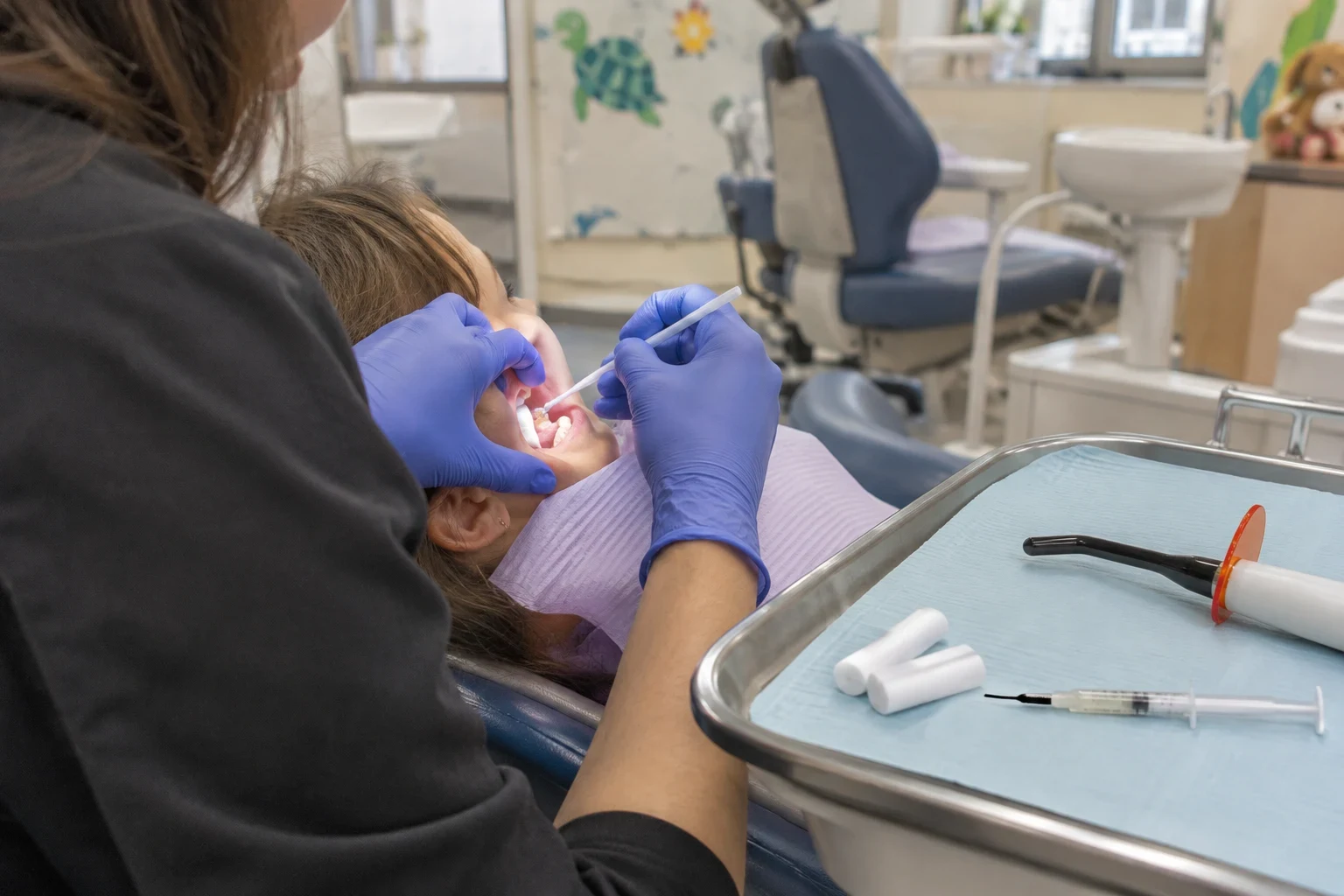
Sealants are a thin, tooth-colored resin we bond into the deep grooves of your child's molars. There's no drilling and no numbing. We check your insurance benefits before the visit, so you know how the plan is likely to treat the sealant.
What a Sealant Does and Why Molars Need One
The chewing surface of a molar isn't flat. It's crossed by pits and fissures, narrow grooves that can be thinner than a single toothbrush bristle. Food and bacteria settle there, the bacteria make acid, and the enamel at the bottom of the groove starts to soften. That's why most cavities in kids start on the biting surfaces of back teeth.
A sealant fills those grooves with a flowable resin that hardens in place. The surface becomes smooth and easy to brush, and bacteria lose their hiding spot. It doesn't replace brushing, flossing or fluoride treatment. It closes off the one area those habits handle worst.
The usual timing follows eruption. First permanent molars come in around age 6, and second molars come in around age 12. We like to seal each tooth soon after it fully erupts, before decay has a chance to start. In our 11+ years in practice, we have found that catching that window is what makes the biggest difference.
What the Sealant Visit Includes
- A groove-by-groove check
- Before sealing, we look closely at each tooth. If a groove already has decay that has reached past the enamel, it needs a filling instead, and we'll tell you so.
- Cleaning and isolation
- We polish the surface with a gritty paste and keep the tooth dry with cotton rolls or a small isolation device. Saliva on the enamel is the most common reason a sealant fails early, so this step matters.
- Etching and bonding
- A mild etching gel roughens the enamel at a microscopic level so the resin can lock in. Then we flow the sealant into the grooves and harden it with a blue curing light in a few seconds.
- A bite check
- We have your child bite on thin marking paper and smooth any high spots. That way the tooth feels normal right away.
- Insurance paperwork
- We send the claim with the correct procedure code and tooth numbers. If the plan asks for more information, we'll explain what was submitted and why.
Signs Your Child Is Ready for Sealants
New molars just came in
If you can see a new back tooth behind the baby teeth, often around age 6 or 12, that's the ideal time to seal it.
Deep, stained grooves
Dark lines in the grooves can be staining or the start of decay. We check which one it is before deciding to seal.
A history of cavities
Kids who have already needed fillings tend to have deeper grooves or higher bacterial levels. A sealant helps lower the risk for the teeth that are still healthy.
Braces or a busy routine
Brushing gets harder with brackets, sports schedules or a teen who rushes through it. A sealed surface is more forgiving.
Deep grooves on baby molars
Sometimes baby molars have fissures deep enough to seal, especially if those teeth need to last several more years.
How Sealant Day Runs
- 1
Benefits checked ahead
When you book by phone, we take your plan details and review your sealant coverage before the visit. That includes age limits and which teeth are covered.
- 2
Quick, comfortable prep
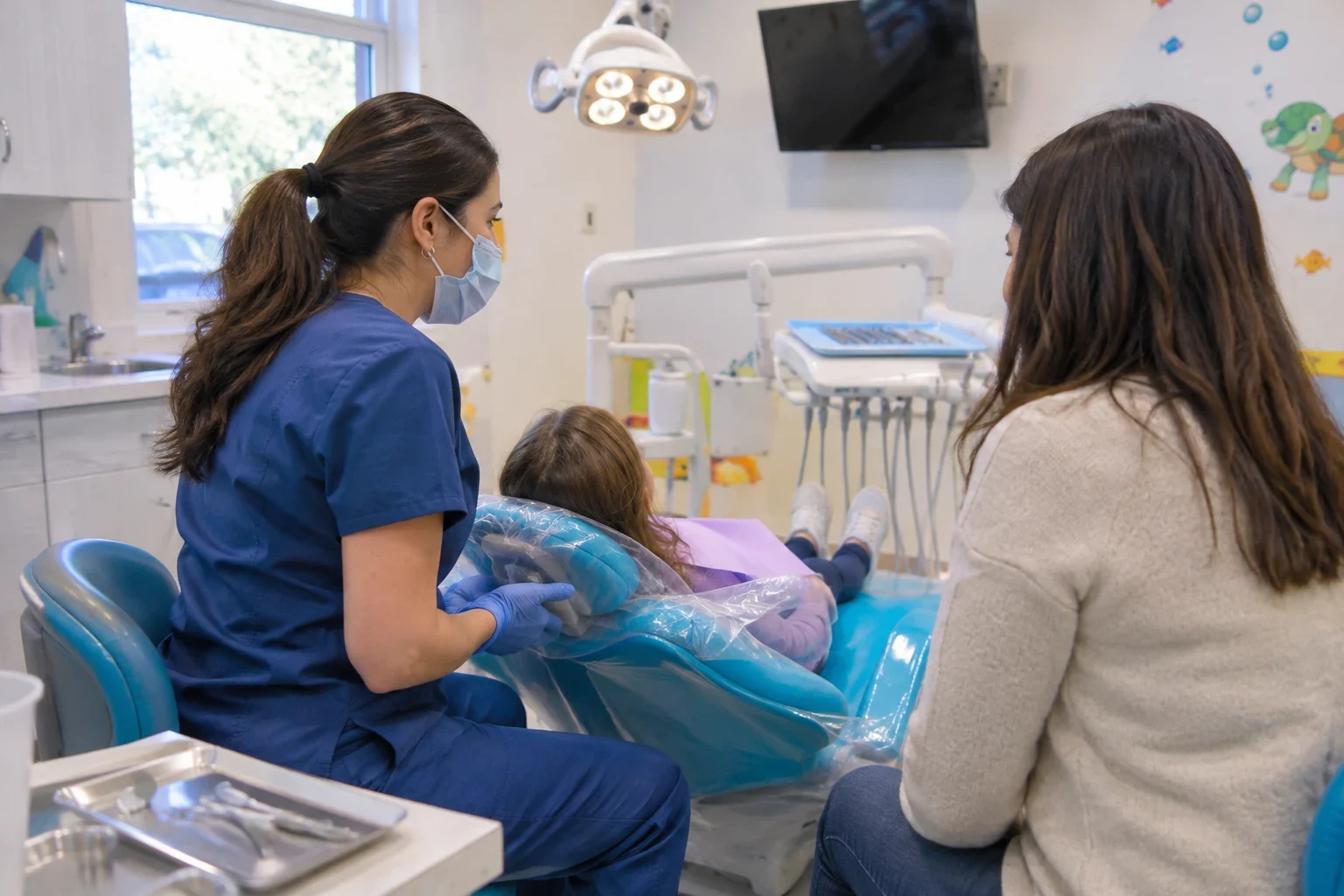
Your child sits back and we clean and dry the teeth. There are no shots and no drilling. Most kids say the hardest part is keeping their mouth open.
- 3
Seal and cure
We place the etch, rinse it off, flow on the resin and cure it with the light. The etch can taste a little sour for a moment. Each tooth takes only a few minutes.
- 4
Back to normal right away
Your child can eat and drink as soon as the visit ends. We check sealants at every cleaning, and if one chips or wears, we usually touch it up instead of starting over.
What Affects the Cost of Sealants
Each sealed tooth is billed as its own line, so a visit for two molars and a visit for eight end up in very different places. For most families the insurance plan's rules move the final number more than the tooth count, and we review those rules with you before treatment so the bill holds no surprises. We accept MasterCard, Visa, Discover, most insurance plans and CareCredit Patient Payment Plan.
- How many teeth get sealed
- Four first molars in one sitting costs less than a visit that covers all eight molars plus the premolars.
- Your plan's age and tooth limits
- Many plans cover sealants only on permanent molars and only up to a set age. Baby teeth or premolars may be excluded, and we'll tell you which teeth your plan includes.
- Frequency rules
- Plans often limit how often a sealant on the same tooth is covered. If one needs replacing inside that window, we explain how it will be billed before we do the work.
- Condition of the groove
- If early decay has to be cleaned out first, the tooth may need a small filling instead. That is coded and priced differently from a sealant.
Sealant Questions From Parents
Something not covered here? (508) 456-8186
Does getting a sealant hurt?
No. Nothing is drilled or numbed. Your child will feel the polishing paste, a stream of air and the curing light. Most kids finish the visit without any discomfort.
How long do sealants last?
A sealant that has locked firmly into the etched enamel can last several years, but chewing slowly wears it down. That's why we check every sealant at routine exams and cleanings and touch up any thin spots before decay can start underneath.
Will my insurance cover sealants?
Many plans do for permanent molars, often within an age range the plan sets. We can't promise what a carrier will pay. We do check your benefits beforehand, file the claim with the correct codes and tooth numbers, and walk you through the explanation of benefits by phone if something is denied.
Are sealants safe?
Sealants use a dental resin that has been studied for decades and is applied in a very thin layer. If you have questions about the materials, ask us at the visit and we'll explain what we use and why.
Can you seal a tooth that already has a small cavity?
If the decay is limited to the outer enamel, a sealant can sometimes cover it and stop it from progressing. If it has gone deeper, the tooth needs a filling. We'll show you what we see and explain which treatment makes sense.
Seal the Grooves While the Molars Are New
Tell us your child's age and your insurance plan when you call. We'll set up the visit and review the sealant benefits in advance, and new patient registration takes just a few minutes on the same call.