ServicesFluoride Treatment
Fluoride Treatment for Kids in Norton
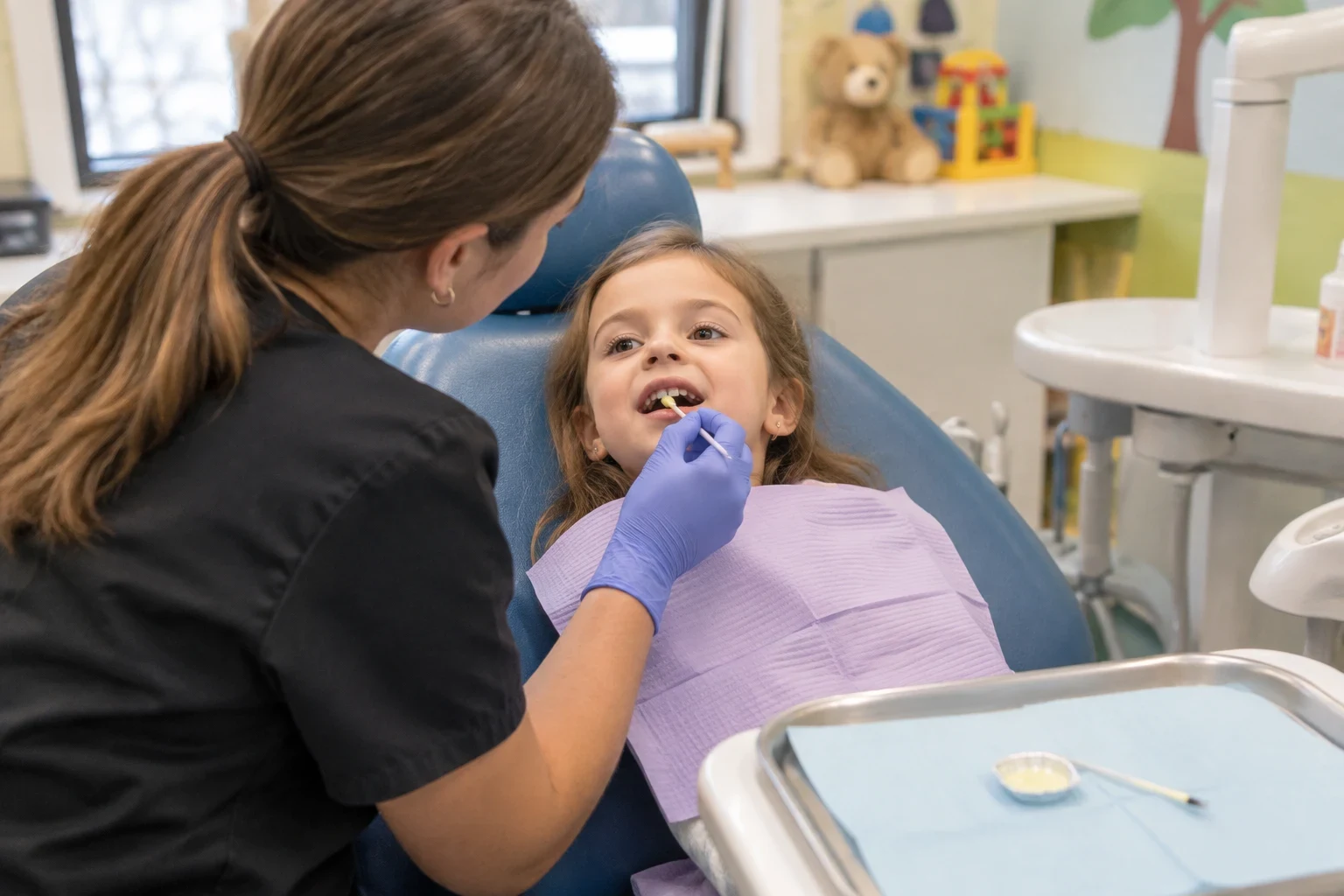
We paint a thin layer of fluoride varnish onto your child's teeth. It sets in seconds and keeps releasing fluoride into the enamel for hours. That helps rebuild weak spots before they turn into cavities. No needles, no drilling, and kids are back to their day right away.
What Fluoride Varnish Does and Why It Works
Tooth enamel is mostly hydroxyapatite, a mineral that dissolves when the bacteria in plaque turn sugar into acid. Every snack starts a small acid attack. Saliva repairs some of that loss, but when acid wins too often, chalky white spots form. Those spots are the earliest stage of a cavity.
Fluoride varnish holds a high concentration of sodium fluoride in a sticky resin. Once it touches saliva, it hardens and leaves a calcium fluoride reserve on the tooth surface. Over the next several hours, that fluoride is drawn into the enamel and forms fluorapatite, which resists acid better than the original mineral. Early white spots can harden again instead of breaking down into a hole that needs a filling.
Baby teeth have thinner enamel than adult teeth, and newly erupted permanent molars are not fully mineralized yet. That is why the years from first tooth through the early teens are when varnish does the most good.
What Your Child's Fluoride Treatment Includes
- 01
A quick look at the enamel
Before we apply anything, we check for white spot lesions, plaque buildup along the gumline and grooves that trap food. That tells us how often your child likely needs varnish.
- 02
Drying and isolating the teeth
We wipe the teeth dry with gauze. Varnish bonds best to a dry surface, and it only takes a few seconds per section.
- 03
Painting on the varnish
We use a small soft brush to coat each tooth. The whole application usually takes less than a minute, and the amount used is very small.
- 04
Aftercare instructions for parents
You leave with simple rules: soft foods and cool drinks for the rest of the day, and no brushing until the next morning. We also explain the slight yellow tint some varnishes leave, which brushes off.
- 05
Help with your coverage
Many dental plans cover fluoride but limit how often and up to what age. We tell you what your plan's paperwork shows before treatment, so you are not guessing about the bill.
Questions about Fluoride Treatment?
Call(508) 456-8186Signs Your Child Could Use Fluoride Treatment
Chalky white spots near the gums
Dull white bands along the gumline mean enamel has lost mineral. This is the stage where varnish can still help the tooth repair itself.
A recent cavity
A child who has had one cavity is at higher risk of more. Regular varnish lowers that risk while we watch the other teeth.
Frequent snacks or sipping
Juice, milk in a sippy cup at bedtime, or grazing on crackers keeps acid on the teeth for long stretches. More acid exposure means enamel needs more support.
Well water or mostly bottled water
Many private wells and bottled waters have little fluoride. If that describes your family's water, your child may be getting less fluoride than you think.
Braces or new molars coming in
Brackets trap plaque, and new six-year and twelve-year molars have soft, deep grooves. Both are common places for decay to start, and sealants and varnish work well together there.
How a Fluoride Visit Goes
- 1
Usually paired with a checkup
Most kids get varnish at the end of their exams and cleanings. Clean teeth let the varnish reach the enamel directly.
- 2
Seated, or in your lap
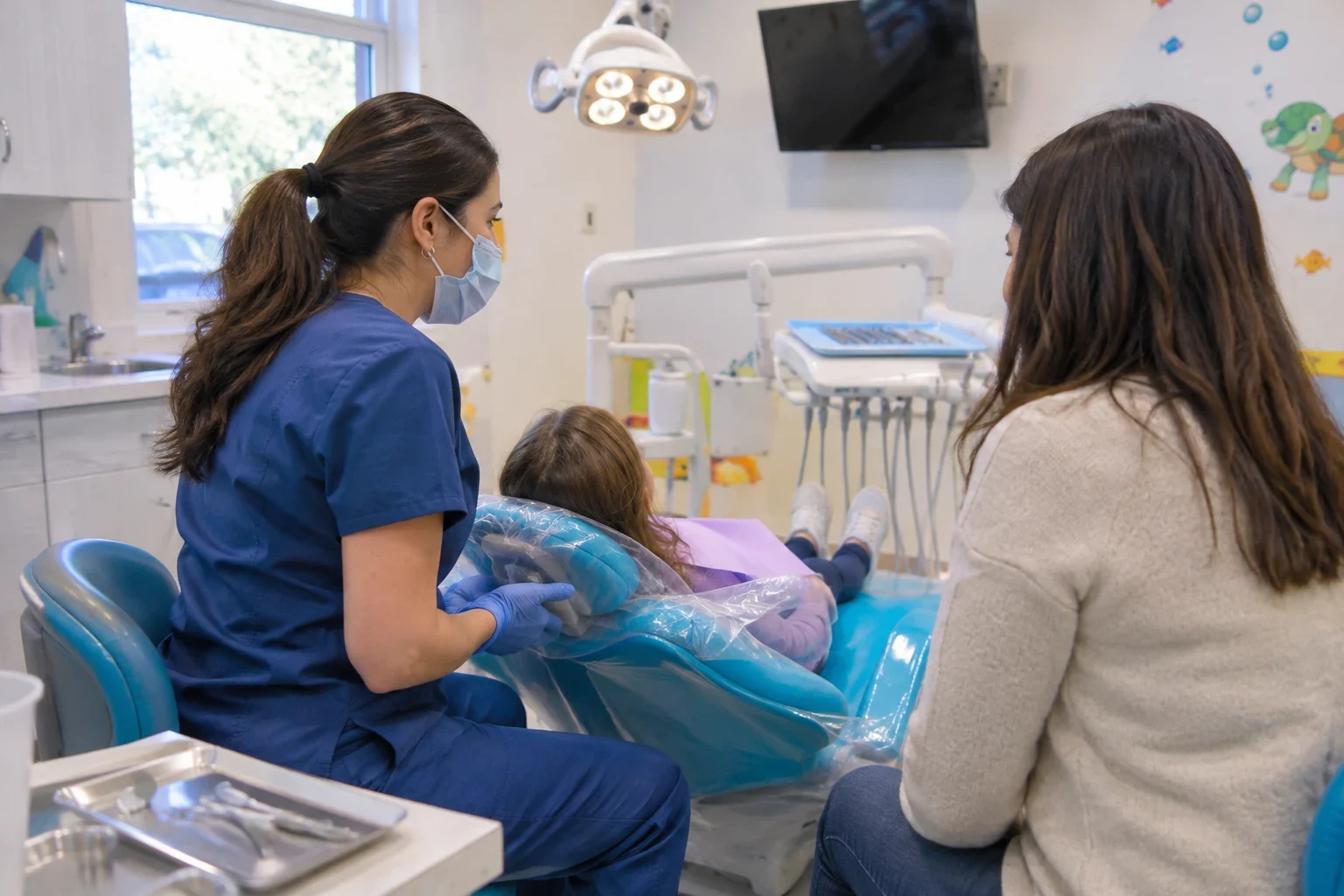
Older kids sit in the chair. For babies and toddlers, we often do a knee-to-knee position with you holding your child, which feels safer and is very quick.
- 3
Dry, paint, done
We dry each section of teeth, brush on the varnish and move on. It sets on contact with saliva, so there is no waiting and no rinsing.
- 4
The rest of the day
Your child can eat and drink right away, but stick to soft, cool foods and skip anything crunchy or hot until bedtime. Brush normally the next morning to remove what is left.
What Moves the Price of a Fluoride Application
A varnish application uses a very small amount of material and about a minute of chair time, so the fee on its own is modest. The part that varies from family to family is your out-of-pocket share, and that depends mostly on the fluoride terms in your child's dental plan. We accept MasterCard, Visa, Discover, most insurance plans and CareCredit Patient Payment Plan.
- How often your plan pays
- Many policies allow fluoride once or twice in a benefit year. When your child's enamel needs applications more often than that, the extra visits may fall outside coverage. We point that out before the brush touches a tooth.
- The birthday cutoff
- Some plans end fluoride benefits at a set age, often somewhere in the early or mid teens. We check that limit in your benefits so a teenager's application does not turn into a surprise line on the statement.
- How much decay risk we see
- Healthy enamel and steady brushing habits usually mean two applications a year. Active white spots or a recent cavity can call for varnish every three months, which adds visits over the year.
- What else happens that day
- Varnish is normally billed alongside an exam or cleaning. If your child also gets sealants or a filling at the same appointment, each procedure is listed separately so you can see exactly what you are paying for.
Fluoride Treatment Questions From Parents
Is fluoride varnish safe for a baby or toddler?
Yes. Varnish is used from the first tooth because it sets quickly and very little is swallowed. The amount on a toddler's teeth is a small fraction of what would cause any concern. That is one reason varnish replaced the older foam trays for young kids.
Can fluoride varnish cause white streaks on adult teeth?
Dental fluorosis comes from swallowing too much fluoride day after day while adult teeth are still forming under the gums. A varnish applied a few times a year does not do that. The bigger fluorosis risk is a child swallowing large amounts of toothpaste, so use a rice-grain smear under age three and a pea-size amount after.
How often should my child get fluoride?
Most kids do well with two applications a year. Kids with early decay, braces or a history of cavities often benefit from every three to four months. We base the interval on what we see in your child's mouth, not on a fixed schedule.
Will my insurance pay for it?
Many plans do, within limits on frequency and age. Bring your insurance card to the visit and we will read the fluoride terms in your benefits with you. If a visit falls outside what the plan allows, we tell you before treatment rather than after.
Does fluoride replace sealants or brushing?
No. Fluoride strengthens the smooth surfaces of enamel. Sealants block the deep grooves on molars where brush bristles cannot reach. Daily brushing removes the plaque that makes acid in the first place, and all three work together.
How long have you been treating kids?
Our practice has 11+ years in practice caring for kids' teeth. Fluoride varnish is part of nearly every checkup we do, so we have walked a lot of nervous toddlers and their parents through it.
Give Your Child's Enamel a Head Start
A fluoride application takes about a minute and fits right into a regular checkup. New to our office? We can get your child registered over the phone and set the first visit.