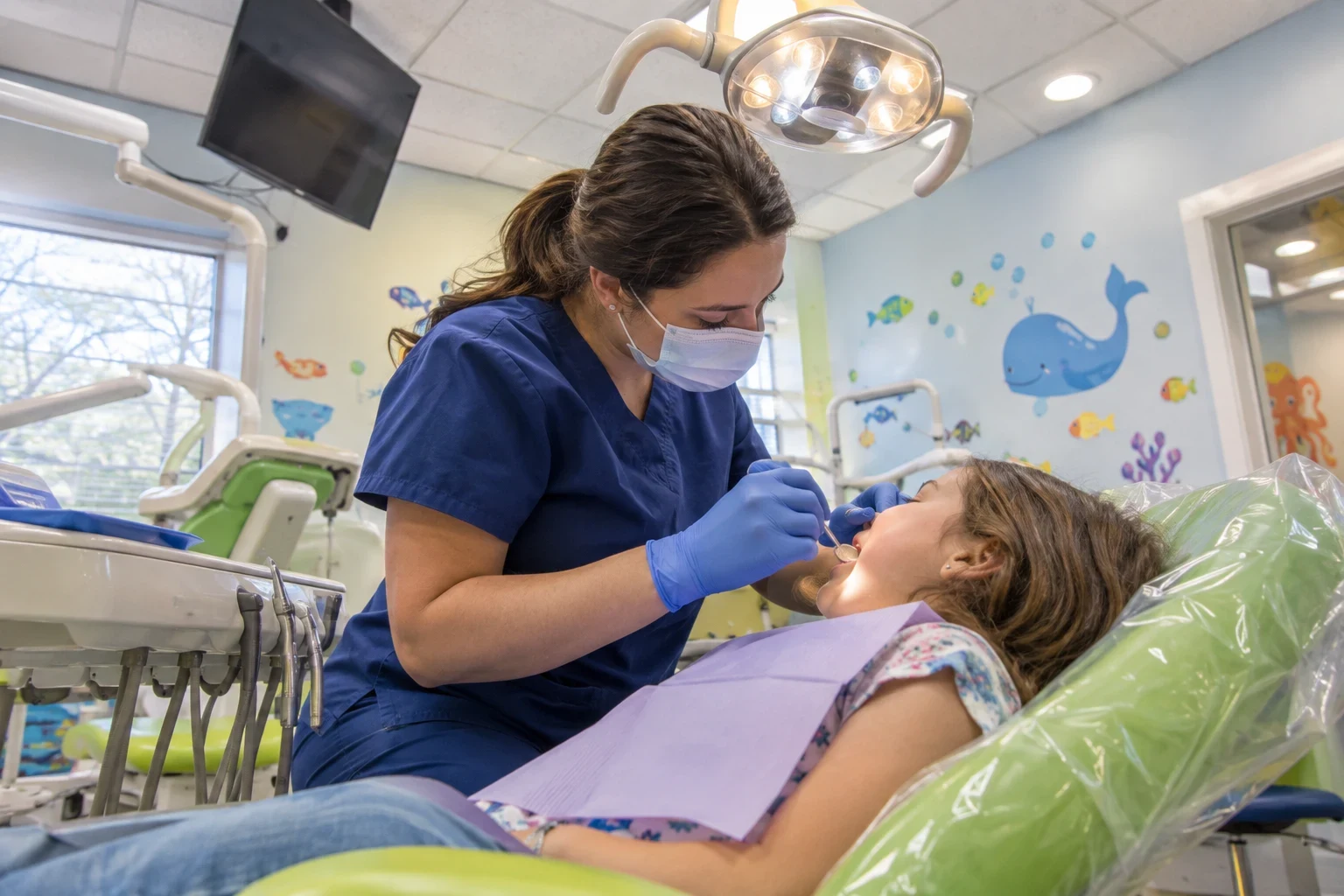
Norton Pediatric Dentist With Straight Answers on Coverage
We care for babies, kids and teens with exams and cleanings, sealants, fluoride, fillings, crowns and sedation when a child needs it. Families from Norton, Mansfield and Attleboro come to us for calm visits and straight answers about what their dental plan will and will not pay.
- Gentle, kid-friendly visits
- Benefits explained plainly
- Written treatment plans
- Most insurance plans accepted
Families We See Around Norton
Our office serves Norton and Norton Center, along with families from Mansfield, Mansfield Center, Easton and Raynham. Many parents also drive in from Taunton, Attleboro, North Attleborough, Foxborough and Sharon for checkups and treatment.
- Norton
- Norton Center
- Mansfield
- Mansfield Center
- Taunton
- Attleboro
- North Attleborough
- Easton
- Foxborough
- Sharon
- Raynham
If you are unsure whether the drive fits your schedule, call and we can help you choose an appointment time that works around school pickup.

Dental Care for Every Stage of Childhood
Baby teeth have thinner enamel than adult teeth, so a small spot of decay can reach the nerve faster than parents expect. Our preventive work, exams and cleanings, sealants and fluoride treatment, is aimed at stopping that early. When a tooth does need treatment, we handle fillings, pediatric crowns, root canals, extractions and space maintainers, plus frenectomies for tongue-tie and lip-tie. Sedation dentistry is available for kids who need extra help staying comfortable.
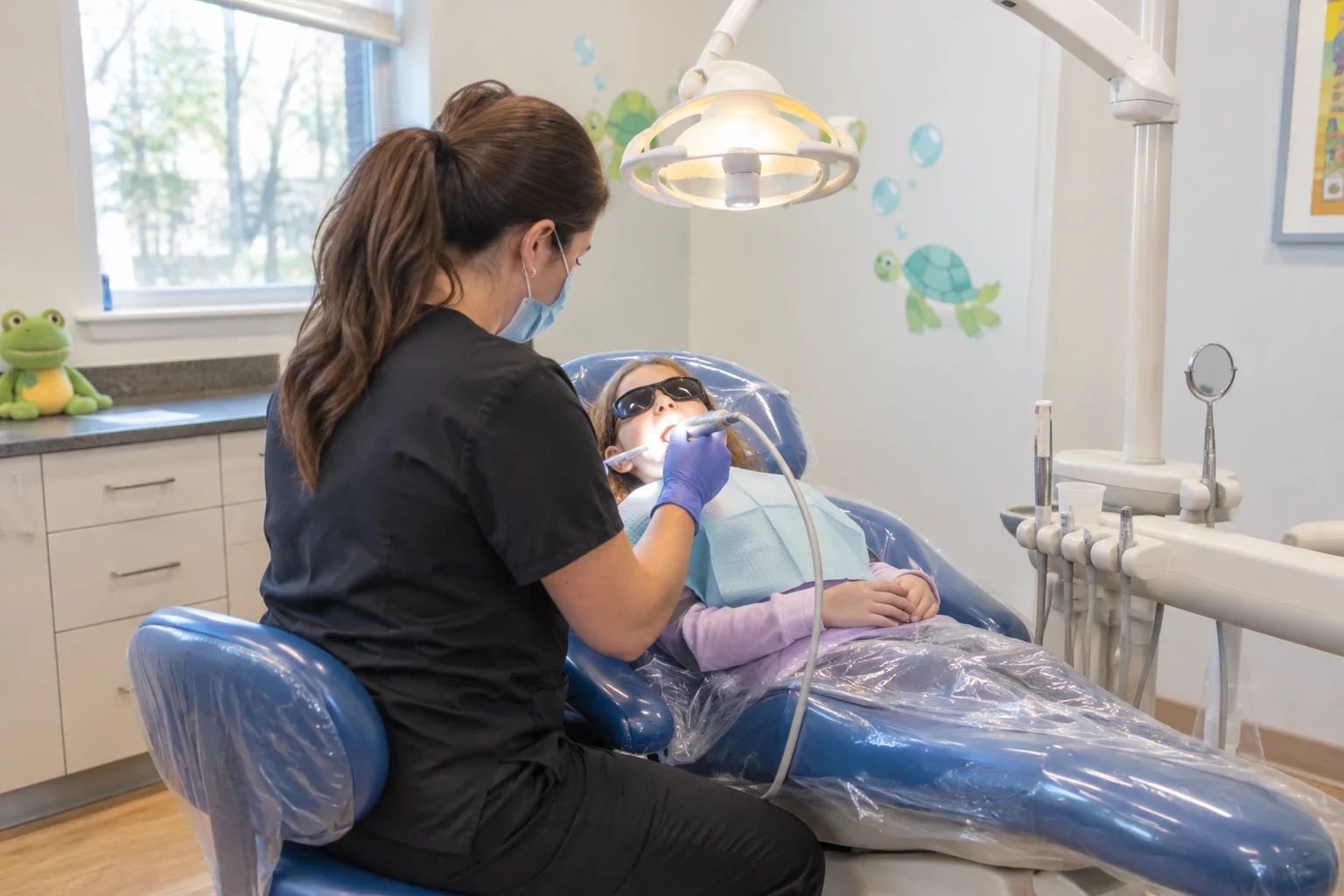
Exams & Cleanings
Six-month checkups that chart every tooth, catch early decay between molars, clean off plaque and tartar, and explain how the visit is billed to your plan.
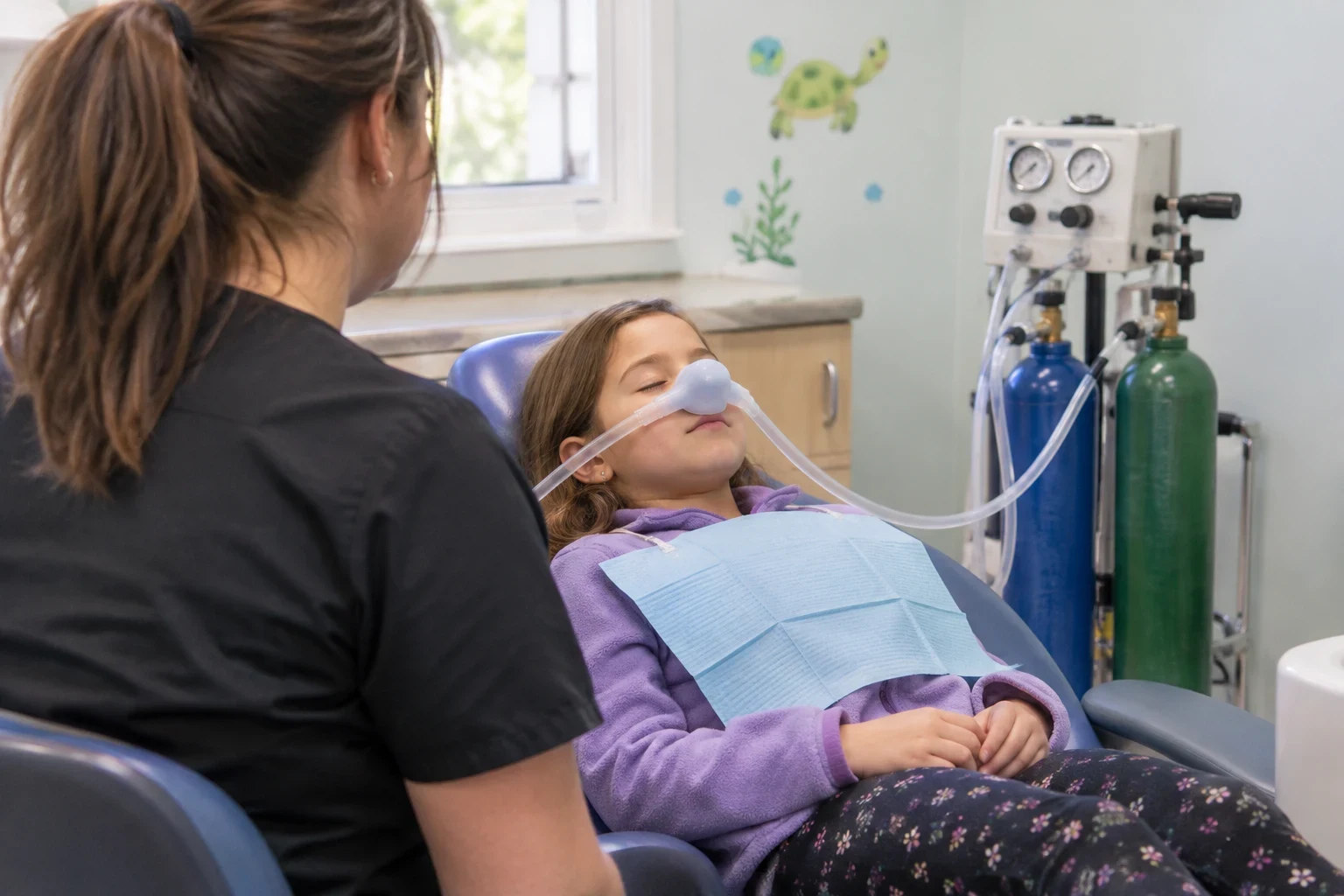
Sedation Dentistry
Nitrous oxide and oral sedation that help anxious or very young kids get needed dental work done calmly, with help understanding how insurance treats it.
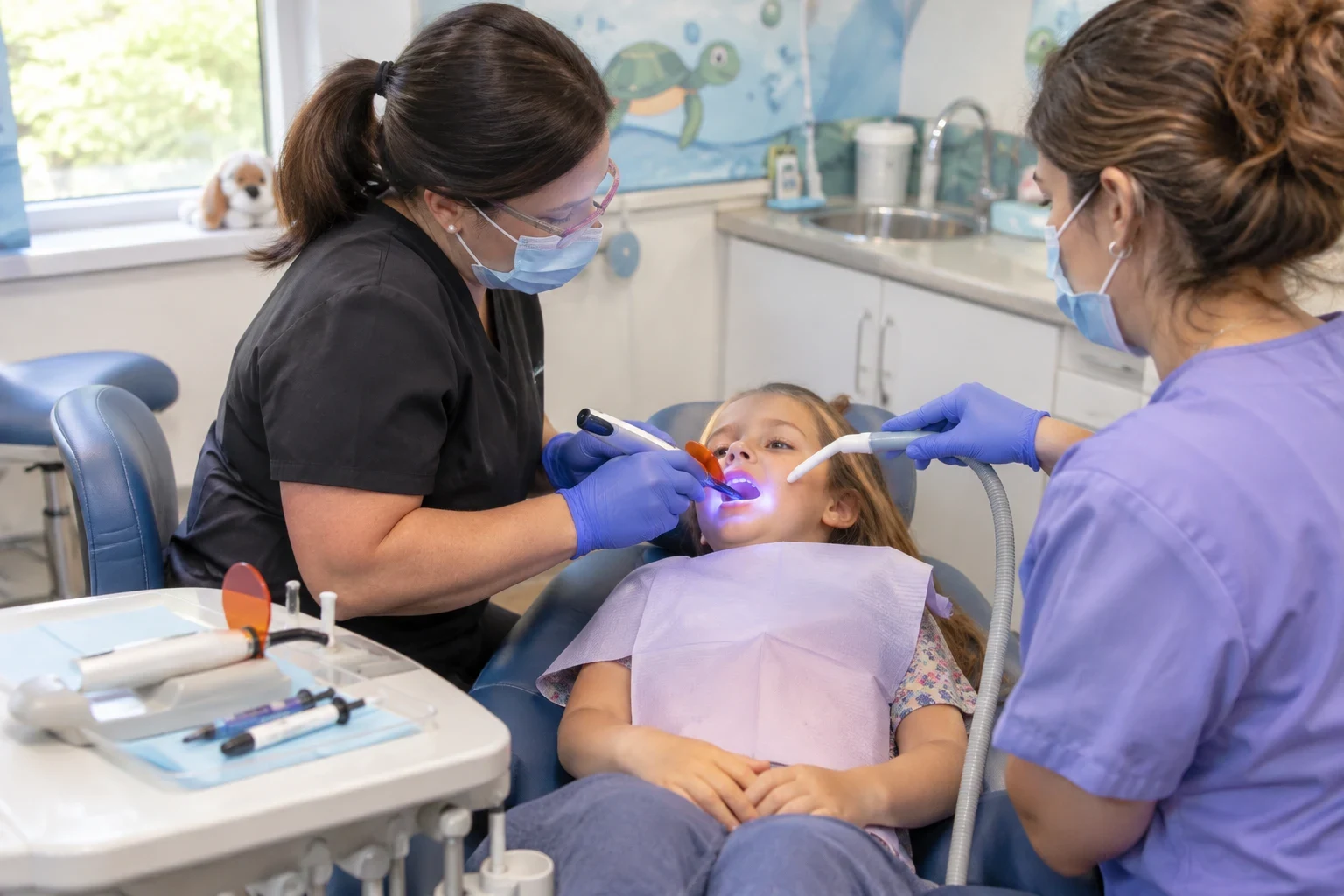
Fillings
Tooth-colored fillings that stop decay in baby and adult teeth, with x-rays you can see and clear help with your dental plan's claim.
Root Canals
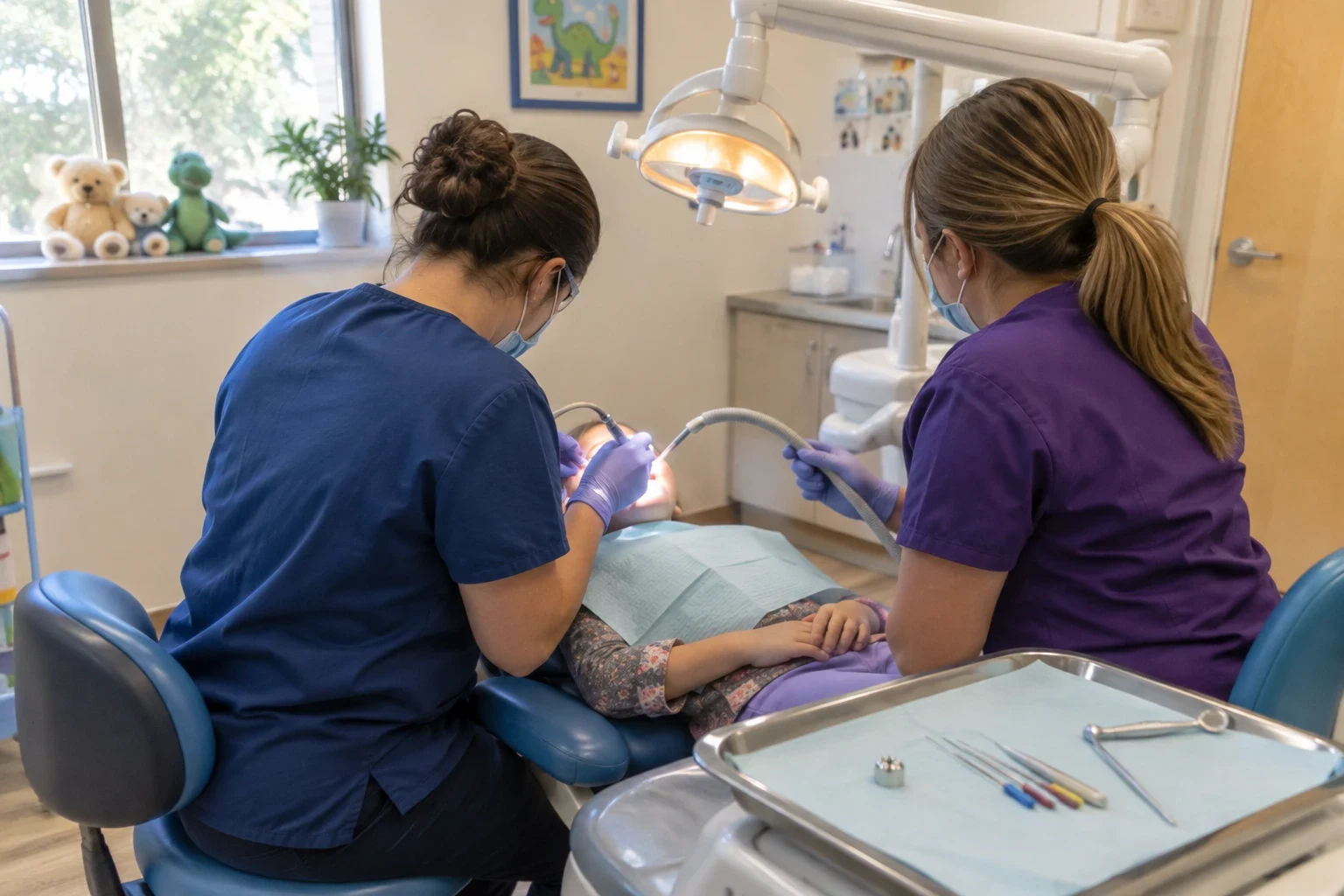
Pulpotomy, pulpectomy and root canal care for infected baby and permanent teeth, with x-rays and notes ready for your insurance claim.

Extractions
When a baby tooth won't let go, a tooth is too decayed to save or the orthodontist needs room, we remove it gently and explain what comes next.
Frenectomies
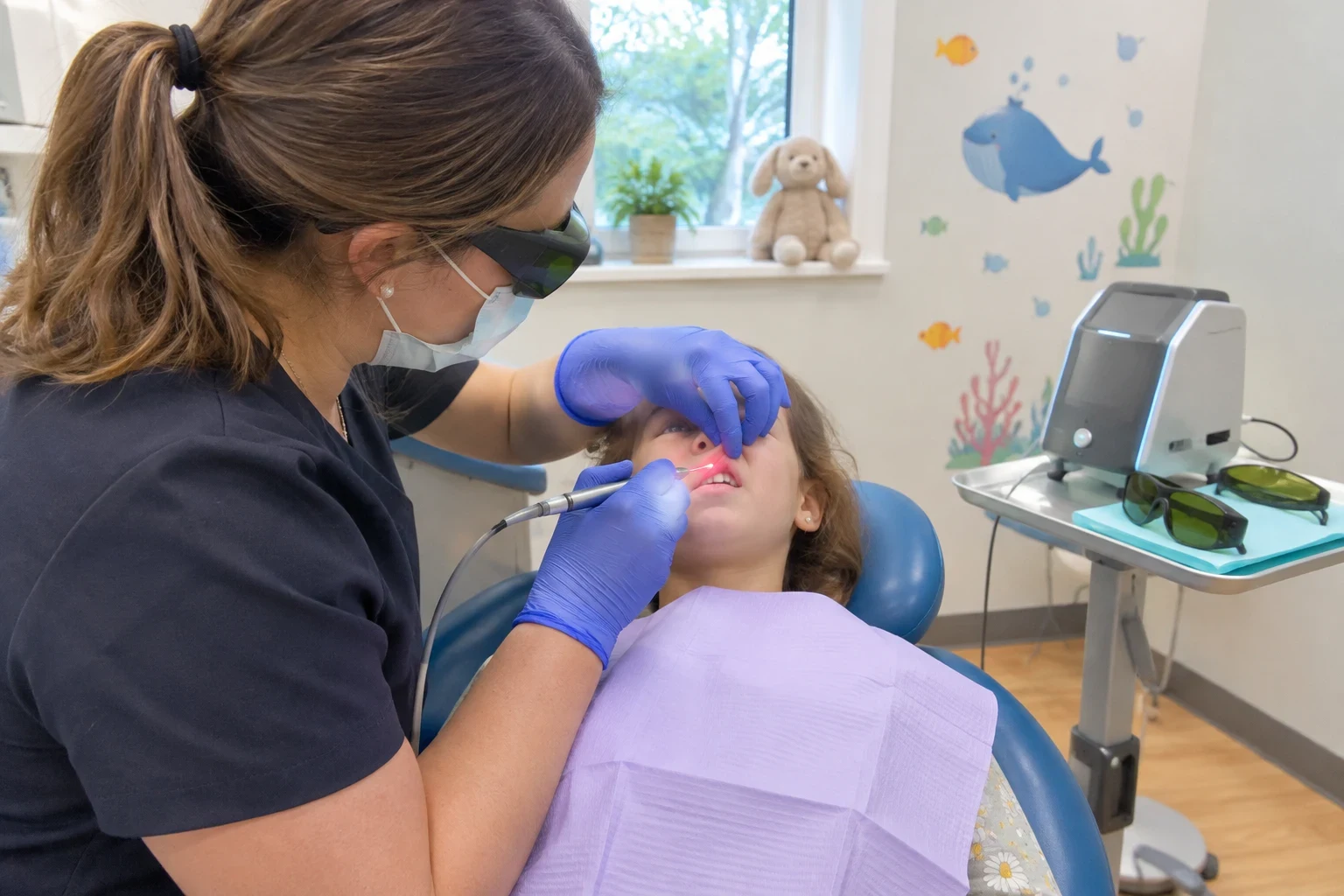
A frenectomy releases a tight band of tissue under the tongue or upper lip when it limits feeding, speech or how well your child's teeth stay clean.
Sealants
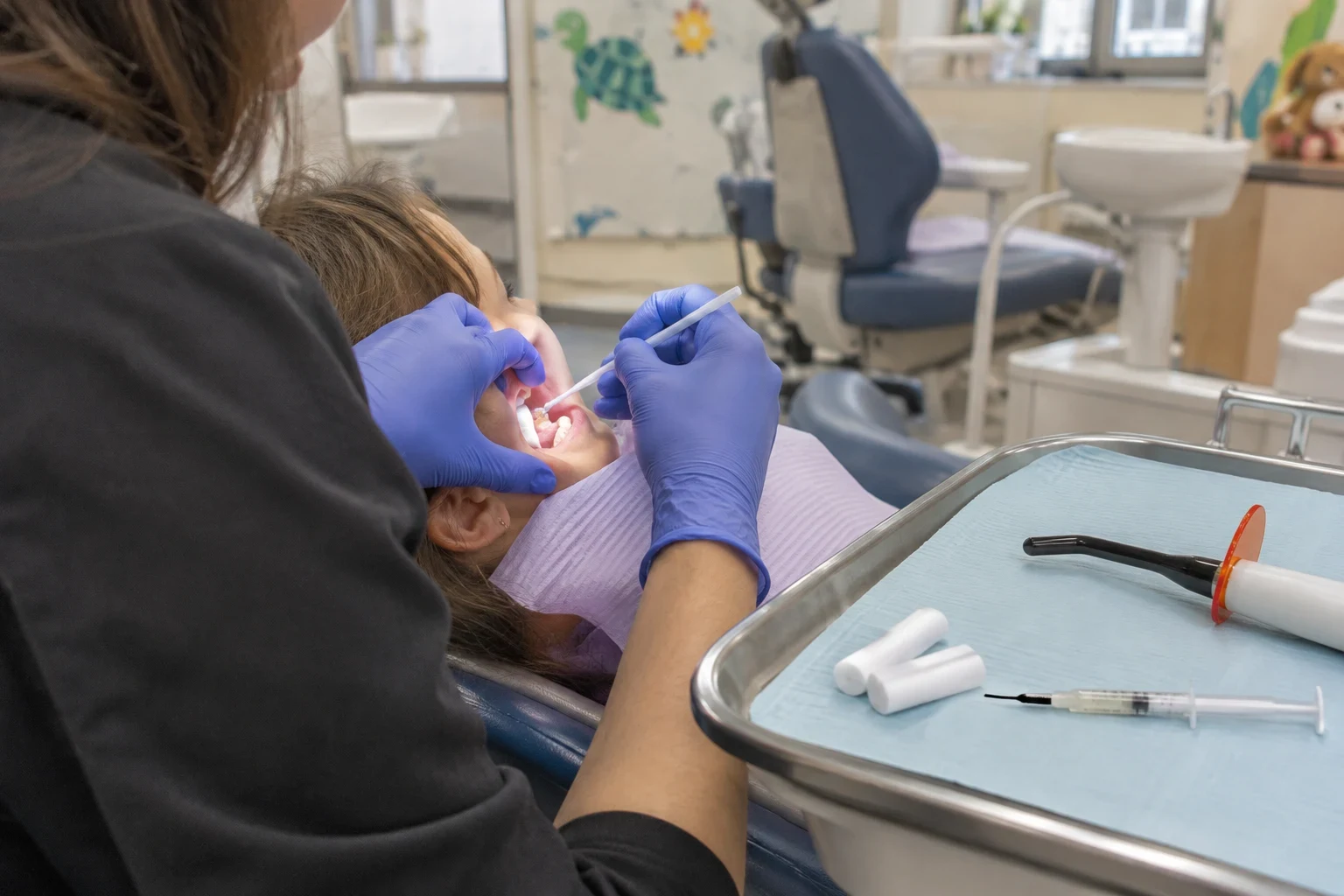
A thin resin coating that seals the grooves of back teeth, where toothbrush bristles can't reach and most childhood cavities begin.
Space Maintainers
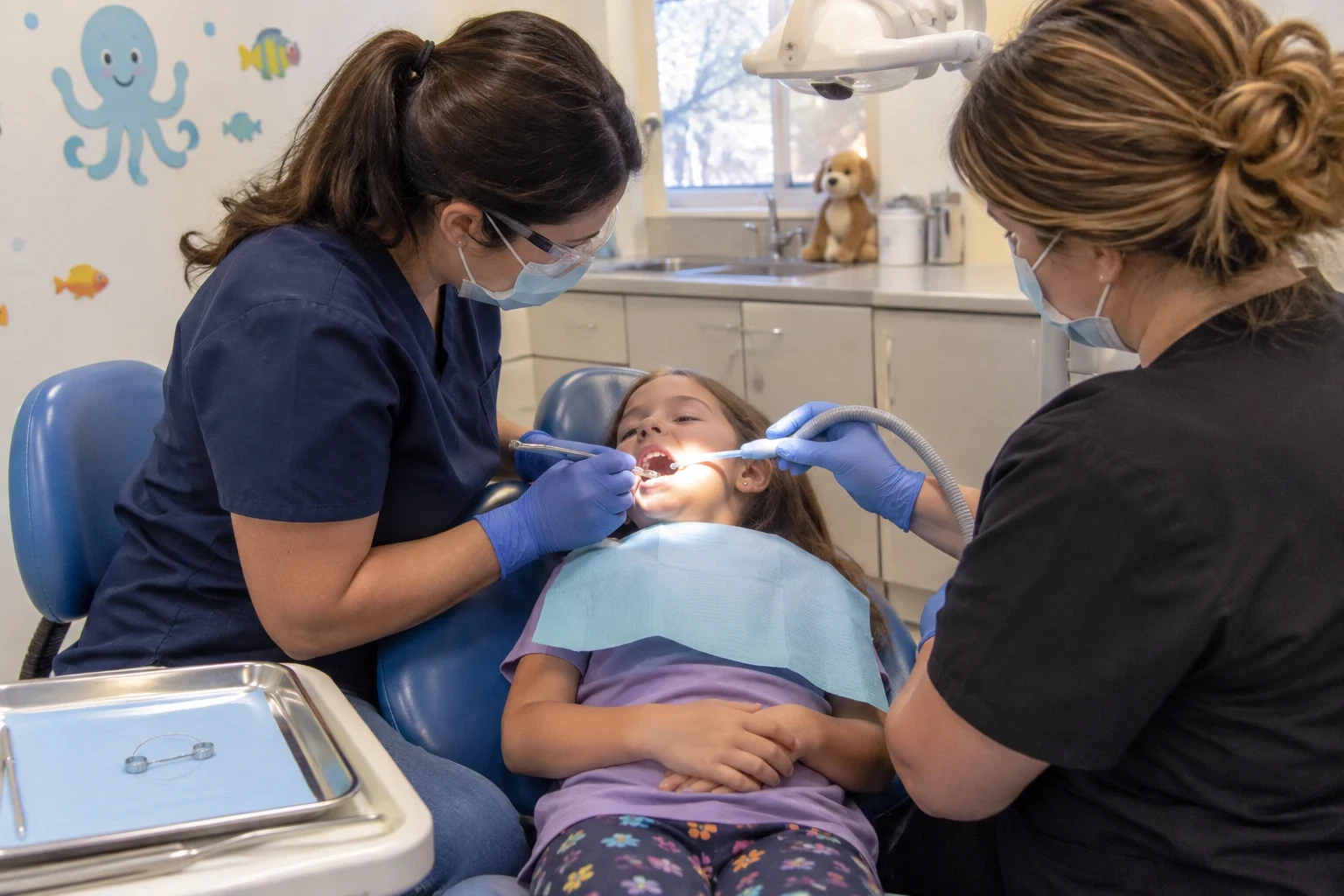
A small custom appliance that keeps neighboring teeth from drifting into the gap left by a baby molar lost too early.
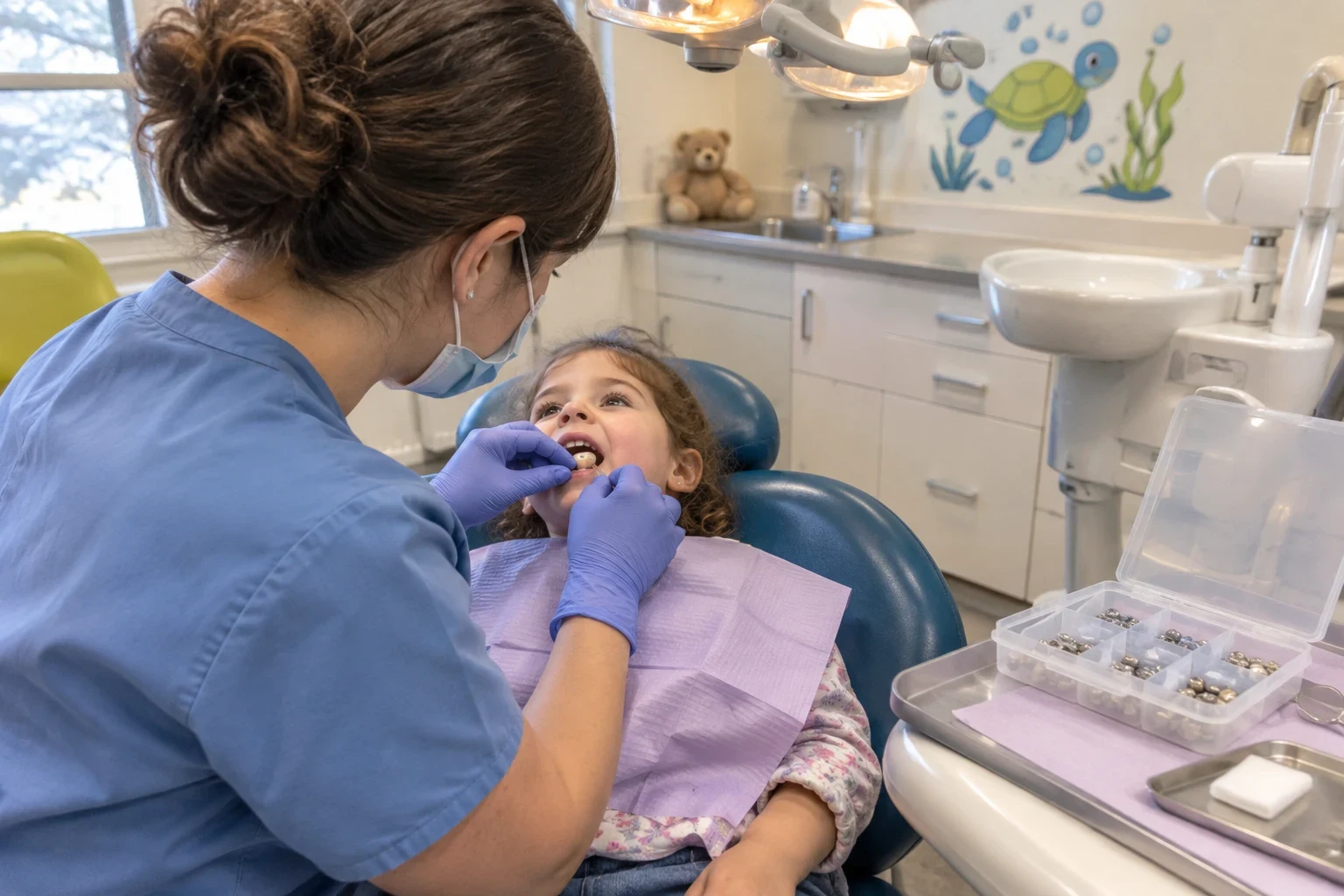
Pediatric Crowns
Full-coverage crowns for baby teeth too damaged for a filling, so your child can chew comfortably until the adult tooth is ready.
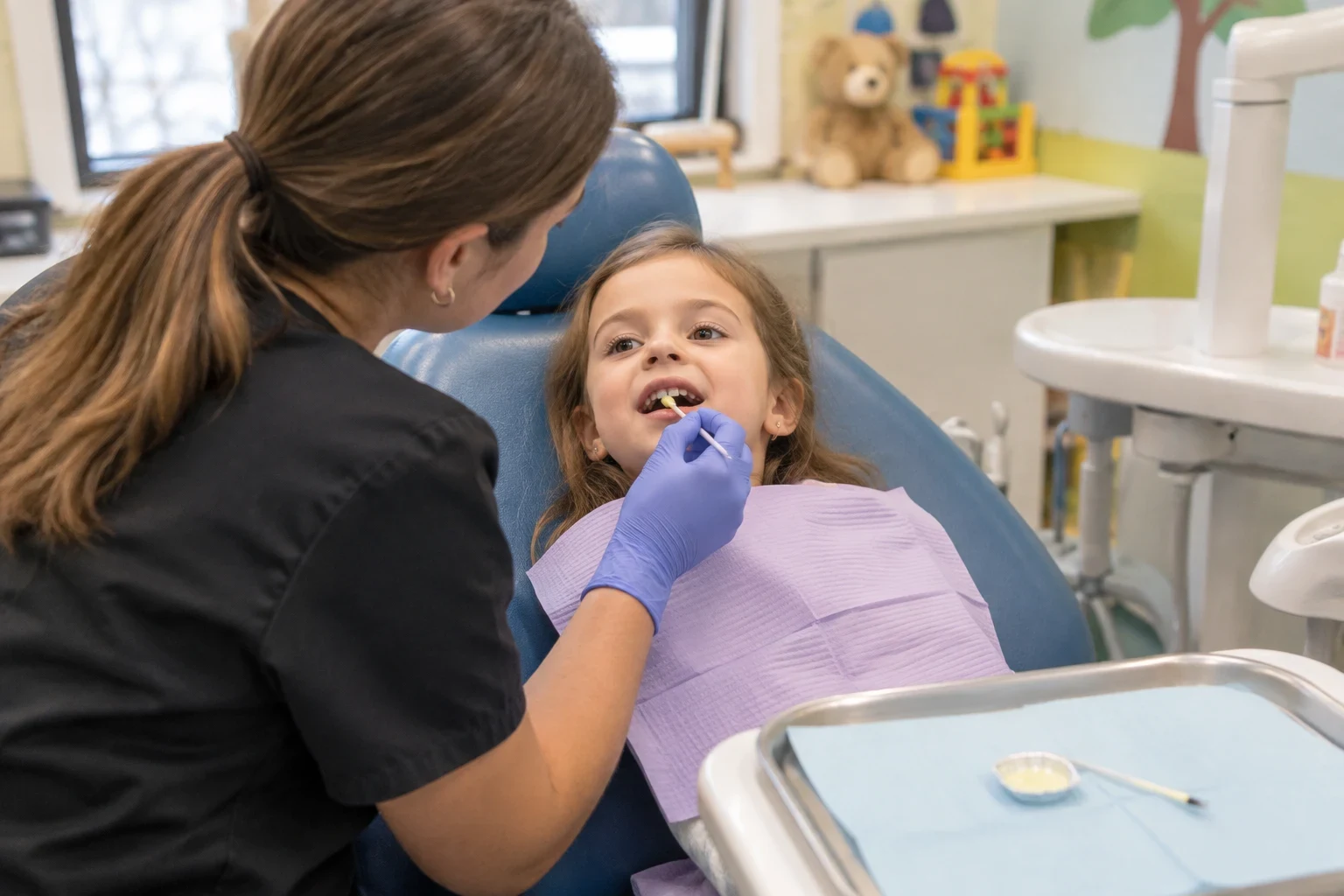
Fluoride Treatment
A thin fluoride varnish painted on your child's teeth in under a minute to harden enamel and help reverse early decay spots.
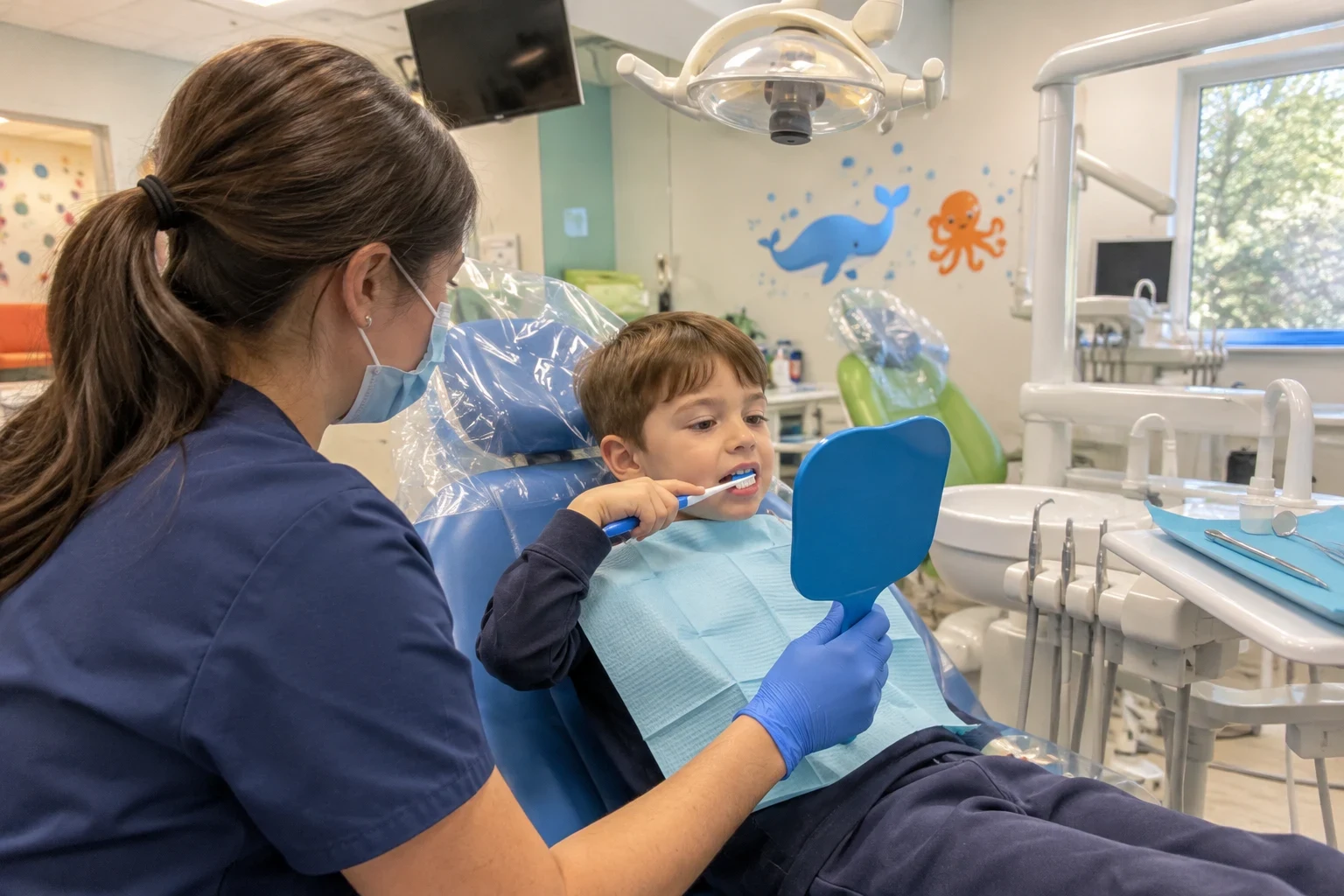
A Practice Built Around Kids
Our Norton, Massachusetts office treats children from the first tooth through the teen years. Chairs, instruments and appointment lengths are sized for small mouths and short attention spans, and our explanations are pitched to parents who want to know why, not just what.
A lot of the stress parents bring to us has nothing to do with the drill. It comes from a confusing benefits statement or a surprise balance. That is why we spend time on the paperwork side: reading procedure codes with you, explaining what a frequency limit means, and keeping clear records when your child has an injury. Many coverage questions can be answered by phone before you ever come in.
- In business
- 11+ years in practice
What Shapes the Cost of Your Child's Care
Every child's mouth is different, so we price care after an exam rather than guessing over the phone. A few factors move the total more than others. Knowing them makes your explanation of benefits much easier to read.
After the exam, you get a written treatment plan listing each procedure and its code, so you can compare it with your benefits before agreeing to anything. For payment, we take Visa, MasterCard and Discover cards, most insurance plans, and the CareCredit Patient Payment Plan.
- Size and depth of decay
- A cavity on one surface of a molar is a smaller job than decay spreading across two or three surfaces. If decay reaches the pulp, the tooth may need a pulpotomy and a crown instead of a filling.
- Restoration material
- Tooth-colored composite, stainless steel crowns and zirconia crowns differ in cost and durability. Some plans pay for one material and treat another as an upgrade.
- Sedation or extra comfort measures
- Nitrous oxide or deeper sedation adds its own line to the bill. Plans vary widely in whether they cover it and for which ages.
- Your plan's frequency limits
- Many plans cover cleanings, fluoride and x-rays only at set intervals, and some cover sealants only on permanent molars up to a certain age. A visit that falls outside those windows may be billed to you.
- How many teeth need care
- Treating several teeth in one visit can mean fewer appointments, but it also uses more of your annual maximum at once.
Why Parents Choose Our Office
Good pediatric dentistry is part chairside skill and part clear communication with parents. Here is how we work on both.
- 01
11+ years in practice
Our practice has been caring for children's teeth for 11+ years. That time has taught us how kids of different ages react to the chair, the suction and the sound of a handpiece, and how to pace a visit around them.
- 02
Plain help with benefits
Dental plans use procedure codes, frequency limits and annual maximums that confuse most families. Before treatment, we walk you through what your plan lists for each procedure and, where your carrier offers it, can request a pre-treatment estimate. We explain the process, but your carrier makes the final coverage decision, and we say so up front.
- 03
Records you can use
If your child chips or loosens a tooth in a fall or a game, we take intraoral photos, x-rays and written notes describing the injury. Those records help if you file with your dental plan or a school or sports accident policy.
- 04
Explaining before we treat
We show your child what each tool does, using words that fit their age, before it goes in their mouth. Parents get the reason for every recommendation, including when watching a tooth is a reasonable choice.
- 05
Treatment options laid out
When there is more than one way to restore a tooth, such as a tooth-colored filling versus a stainless steel crown, we explain how each holds up and how each is usually billed.
How a Visit Works
Most appointments follow the same steps, whether it is a first visit or a filling.
- 1
Call to register
Phone us to set up an appointment or complete new patient registration. Keep your dental plan card nearby so we can note your carrier, group number and subscriber details.
- 2
Exam and x-rays
We count teeth, check gums, bite and tongue movement, and take x-rays only when your child's age and risk call for them. Younger kids often sit on a parent's lap for the exam.
- 3
Treatment plan and benefit review
If anything needs care, we explain what we found using photos or x-rays and give you a written plan. We go over how your plan typically handles each item and can request a pre-treatment estimate when your carrier allows it.
- 4
Treatment at your child's pace
We numb the area with a topical gel before any injection and talk your child through each step. Short breaks are built in for younger patients.
- 5
Follow-up and paperwork
We file claims with your carrier for the work we did and give you copies of records if you need them for a separate accident policy. Before you leave, we set the timing of the next checkup.
Questions Parents Ask Us
- When should my child have a first visit?
- The usual pediatric guidance is to schedule a first checkup when your child turns one, or half a year after that first tooth breaks through the gum, whichever comes sooner. Early visits are short and mostly about checking for early decay, discussing bottle and sippy cup habits, and showing you how to brush tiny teeth. They also let your child get used to the office before any treatment is ever needed.
- Do you take my insurance?
- Yes, most insurance plans are accepted here, and you can also pay with a Visa, MasterCard or Discover card or through the CareCredit Patient Payment Plan. When you call, give us your carrier and plan details and we will check how your benefits apply. Your carrier always makes the coverage decision, so we tell you what we can confirm and what we cannot.
- My child hurt a tooth playing sports. Can you help with a claim?
- Yes, we can document it. We record how and when the injury happened, take photos and x-rays, and write up the findings and treatment. You can use those records with your dental plan or a school or league accident policy, though the plan decides whether to pay.
- Why fix a baby tooth that will fall out anyway?
- Baby molars often stay in place until around ages 10 to 12, and they hold space for the adult teeth underneath. Untreated decay can cause pain and infection, and losing a molar early can let neighboring teeth drift. If a tooth must come out, a space maintainer can hold that gap open.
- Can I stay with my child during treatment?
- For exams and cleanings, parents are welcome chairside, and toddlers often do best on a lap. For some procedures we may suggest a different arrangement if it helps your child focus. We will talk this through with you before the visit.
- How does sedation dentistry work for kids?
- Many children do well with nitrous oxide, a mild gas breathed through a small nose mask that wears off soon after the visit. For longer or more complex work, or for kids with high anxiety or special needs, we discuss other sedation options and the safety steps involved. We review your child's health history before recommending any of them.
- Why does my explanation of benefits show a balance?
- Common reasons include a frequency limit, such as a second fluoride treatment too soon after the last one, a material your plan treats as an upgrade, or a reached annual maximum. Bring the statement or call us, and we will go through each line and procedure code with you.
Ready to Book Your Child's Visit?
A short call gets your child on our schedule and lets us check your plan details before the appointment. New families can complete registration on the same call.