ServicesFillings
Kids' Fillings in Norton
A cavity in a baby tooth still matters. Left alone, it can reach the nerve, cause pain and affect the adult tooth forming underneath. We remove the decay gently, seal the tooth with a tooth-colored material and explain what your dental plan is likely to cover before we start.
What a filling does for your child's tooth
A filling replaces tooth structure that decay has destroyed. Cavities form when bacteria in plaque turn sugars into acid, and that acid dissolves enamel. Enamel on baby teeth is roughly half as thick as on adult teeth, so a small spot can reach the softer dentin underneath faster than most parents expect.
We usually choose between two materials. Composite resin is tooth-colored and adheres directly to enamel, which lets us keep more healthy tooth. Glass ionomer releases fluoride over time and tolerates moisture better, so it suits cavities near the gumline or in young kids who find it hard to hold still. The choice depends on where the cavity sits, how much tooth is left and how many years the tooth needs to stay in place.
With 11+ years in practice caring for children's teeth, we hear the same two questions at almost every filling visit: will it hurt, and what will insurance pay. We answer both before any work begins.
What your child's filling visit includes
X-rays and photos of the cavity
Bitewing x-rays show decay between teeth that the eye can't see, and intraoral photos show what's on the surface. You see the same images we do. They also become the documentation many dental plans ask for with a filling claim.
Careful numbing
A flavored topical gel goes on first, then local anesthetic delivered slowly so it stings less. We describe each step in kid-friendly words like "sleepy juice" instead of naming needles.
Removing only the decay
We take out the soft, infected dentin and leave sound enamel in place. Keeping more natural tooth gives the filling a stronger base.
A tooth-colored restoration, shaped to fit
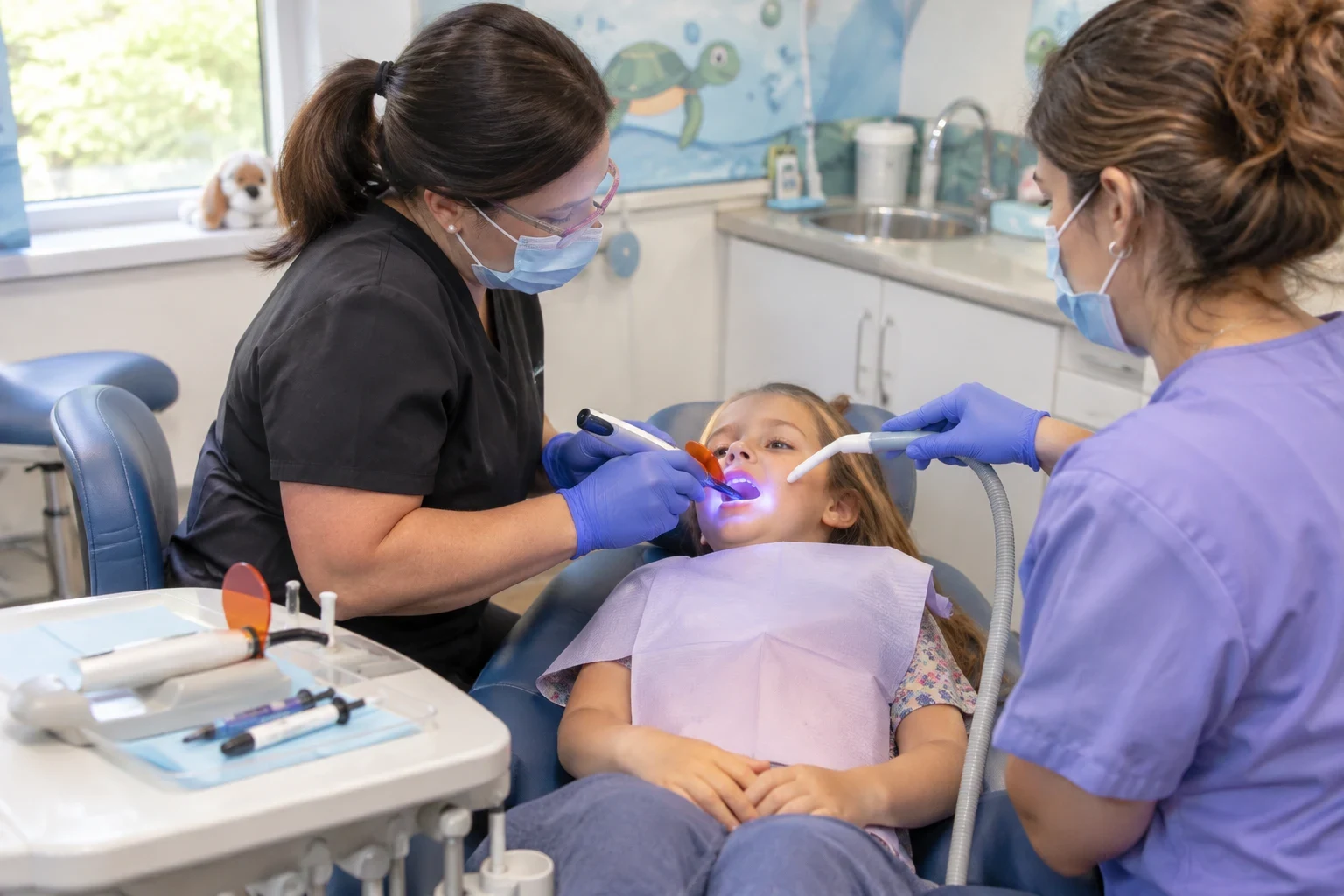
Composite is placed in thin layers and hardened with a blue curing light, then shaped to match the chewing surface. Glass ionomer sets chemically and blends in nearly as well.
Bite check and polish
Your child bites on thin marking paper so we can find and smooth any high spot. A filling that sits too high can make the tooth sore for days.
Help with the claim
We file the claim with your dental plan, including the procedure codes, x-rays and notes it typically requires, and we walk you through your estimated share. We can't promise what a plan will pay, but we tell you what we know before treatment. Questions about it later are answered by phone.
When a tooth may be ready for a filling
Dull patches that change color
Matte, chalky lines along the gumline mean enamel is losing minerals. Dark staining tucked into the grooves of the back teeth usually tells us decay has moved further in.
Wincing at sweets or cold drinks
Sharp, brief pain from juice or ice cream points to exposed dentin, which has tiny channels leading toward the nerve.
Food packing between back teeth
A cavity between molars creates a gap that traps food. Kids may pick at the spot or complain it feels stuck.
Chewing on one side
Younger kids rarely say a tooth hurts. Favoring one side or refusing crunchy foods is often the clue.
A cavity found at a checkup
Many fillings start at a routine visit for exams and cleanings, before your child feels anything. Treating it then keeps the filling small.
How the filling appointment works
- 1
Review the plan with you
We show you the x-rays, name the tooth and the surfaces involved, and explain which material we recommend and why. You get a written estimate and our best read on your coverage.
- 2
Help your child settle in
Your child picks a show or music, and we numb the area slowly. For kids with strong anxiety or several cavities, we can talk with you about sedation dentistry as an option.
- 3
Clean out decay and place the filling
A small rubber shield or cotton rolls keep the tooth dry, which matters because moisture weakens the seal between material and tooth. We remove the decay, place the material and cure or set it. Most single fillings take well under an hour.
- 4
Aftercare and the claim
Numbness usually lasts two to three hours, so watch that your child doesn't chew a lip or cheek. Soft foods are fine right away. We file the claim and call you if the plan asks for anything more.
What affects the cost of a filling
Filling fees depend on how much of the tooth is involved and what it takes to treat your child comfortably. Insurance terms change what you pay out of pocket as much as the procedure itself. We give you a written estimate after the exam so the numbers are clear before work starts.
- Number of surfaces
- A filling on one surface costs less than one that wraps across the top and between two teeth. X-rays show how many surfaces are affected.
- Material choice
- Composite and glass ionomer are billed differently. Some plans pay for tooth-colored fillings on back teeth at the lower silver-filling rate, called an alternate benefit, and we flag that before treatment.
- How many teeth need work
- Several cavities on the same side can often be done in one visit, which can affect both the total and how many appointments your child needs.
- Sedation, if used
- Nitrous oxide or other sedation is a separate charge, and plans cover it differently. We check this with you in advance.
- Your plan's limits and how you pay
- Annual maximums, waiting periods and deductibles all shape your share. For the balance, you can pay with a MasterCard, Visa or Discover card or the CareCredit Patient Payment Plan, and we work with most insurance plans.
Questions parents ask about fillings
Something not covered here? (508) 456-8186
Why fill a baby tooth that's going to fall out anyway?
Back baby molars often stay until age 10 to 12. An untreated cavity can spread to the nerve, cause an abscess and lead to early tooth loss, which lets nearby teeth drift into the space. Filling it keeps the tooth healthy and holding room for the adult tooth.
Will the filling hurt my child?
The topical gel and slow anesthetic keep the tooth numb during treatment. Most kids feel pressure and vibration, not pain. The gum around the tooth can be a little tender that evening, and children's pain reliever as directed on the label usually handles it.
Will our insurance cover the filling?
Most dental plans cover fillings in part, often after a deductible. What varies is the percentage, your annual maximum and whether tooth-colored material on back teeth is paid at a lower rate. We check what we can before treatment and file the claim with the x-rays and notes the plan needs, but the final decision belongs to the insurer.
How long does a filling last in a child's tooth?
In a baby tooth, a well-placed filling often lasts until the tooth falls out naturally. In adult teeth, fillings can last many years with good brushing, flossing and regular checkups. New decay around the edges is the most common reason a filling needs replacing.
What if the cavity is too deep for a filling?
If decay reaches the nerve, the tooth may need pulp treatment, which we explain on our Root Canals page. If too little tooth is left to hold a filling, a pediatric crown protects it better. We tell you which applies after reviewing the x-rays.
Get that cavity treated while it's still small
Small cavities mean smaller fillings, shorter visits and lower costs. Families from Norton, Mansfield and Attleboro bring their kids to us for gentle fillings. One phone call sets up the appointment, and if your child is new to us, we can register them during that same call.