ServicesPediatric Crowns
Pediatric Crowns in Norton
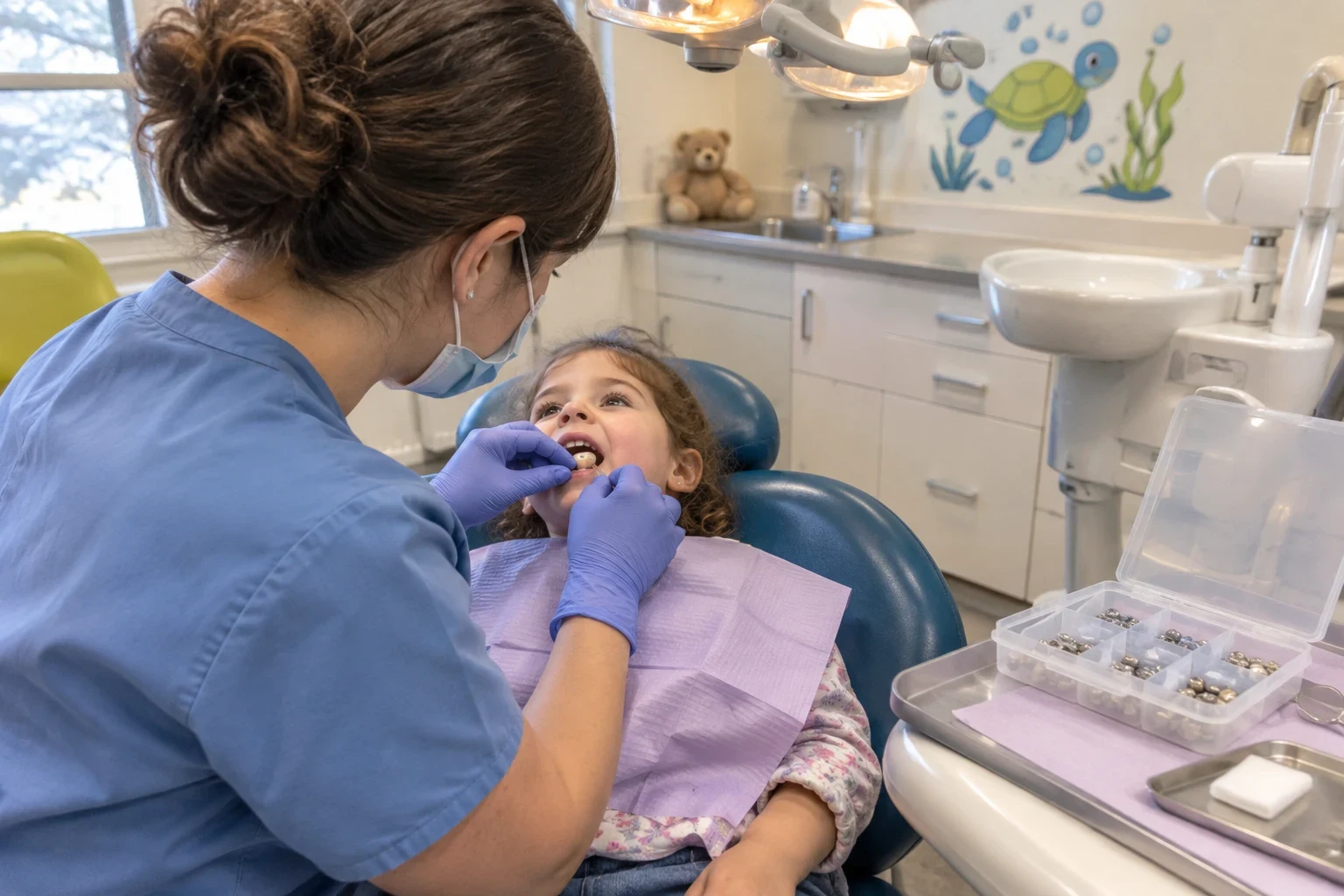
If decay or a crack has left a baby tooth too weak to support a filling, a crown caps every surface so your child can chew normally until the tooth comes out naturally. We walk you through each crown type and record the tooth with X-rays and photos for your insurer.
When a filling is no longer enough
A baby molar has thin enamel and a large pulp chamber, so decay spreads fast once it gets through the outer layer. When it reaches two or more surfaces, a filling has too little healthy tooth around it to grip. Chewing forces then crack the remaining walls, and the filling fails. A crown wraps all of the tooth's surfaces, so the bite load is carried by the crown instead of by a weakened edge.
Keeping the baby tooth matters even though it will eventually fall out. Primary molars hold space for the adult premolars underneath, and many stay in place until age 10 to 12. Losing one early can let neighboring teeth drift and crowd the adult tooth out of its path.
We also know a crown raises questions about cost and coverage. Before treatment we take the X-rays and photos your insurer will want, list the procedure codes, and tell you plainly what we can and cannot predict about your plan's payment.
What a crown visit includes
- Diagnostic X-rays and photos
- Bitewing or periapical X-rays show how deep the decay goes and whether it is near the nerve. Intraoral photos record the broken or decayed surfaces, which helps when an insurer asks why a crown was chosen over a filling.
- Stainless steel crowns
- A preformed stainless steel crown is the most common choice for back baby teeth. It is thin, durable, and fitted by gently crimping its edge so it seals snugly against the tooth. It is also the option most dental plans cover for primary molars.
- Zirconia crowns
- Zirconia is a tooth-colored ceramic that does not flex, so the tooth is shaped a bit more to let the crown slide fully into place. Parents often pick it for molars that show when their child smiles. Many plans pay only the stainless steel amount toward it, and we explain that difference before you decide.
- Strip crowns for front teeth
- For decayed front baby teeth, we fill a clear plastic form with tooth-colored resin, set it over the prepared tooth and remove the form once the resin hardens. The result looks natural but is softer than steel or zirconia, so it suits teeth that do mostly biting rather than grinding.
- Pulp treatment when needed
- If decay has reached the nerve, the tooth may need a pulpotomy before the crown goes on. Details are on our Root Canals page.
- A written treatment summary
- You leave with a summary listing the tooth number, crown type and procedure codes, which makes it easier to check your explanation of benefits later.
Signs your child's tooth may need a crown
Decay on several surfaces
A dark area that wraps from the chewing surface down the side of a molar usually means too much tooth is gone for a filling.
A filling that keeps breaking
When the same filling chips or falls out more than once, the tooth walls around it are often too thin to hold it.
Pain when chewing or with cold
Sensitivity that lingers after a cold drink, or wincing on one side while eating, can point to decay close to the nerve.
A cracked or chipped tooth
A fall on the playground or a hard bite can split a baby tooth. A crown can hold the pieces together if the root is sound.
Weak enamel from birth
Some kids have enamel that is chalky, pitted or yellow-brown and wears away quickly. Covering those molars early can protect them from breaking down.
How the crown appointment works
- 1
Exam and planning
We examine the tooth, review the X-rays with you and recommend a crown type. If you want a pre-treatment estimate from your insurer, we can send the images and codes first and schedule after it comes back.
- 2
Numbing and comfort
We apply a topical gel, then give local anesthetic slowly while talking your child through each step. For kids who are very anxious or need several crowns, Sedation Dentistry may be an option to discuss.
- 3
Shaping and fitting
We remove the decay and shape the tooth so the crown seats fully without pressing on the gums. Each crown is tried on and checked against the opposite teeth so the bite feels even.
- 4
Cementing and aftercare
The crown is set with dental cement. Your child can eat once the numbness wears off, usually in a few hours, and gums may feel a little sore for a day or two.
What affects the cost of a pediatric crown
Three things set the fee: which tooth it is, what the crown is made of, and whether the nerve needs treatment before the crown goes on. What you pay yourself comes down to your particular plan, so instead of guessing we hand you the procedure codes and can ask your insurer for a pre-treatment estimate. For payment, we take most insurance plans, MasterCard, Visa and Discover cards, and the CareCredit Patient Payment Plan.
- Crown material
- Stainless steel, zirconia and strip crowns each carry different fees. Insurers often reimburse tooth-colored molar crowns at the stainless steel rate.
- Pulp treatment
- A pulpotomy before the crown is a separate procedure with its own code and fee.
- Number of teeth
- Treating several teeth in one visit changes the total and may change whether sedation is recommended.
- Sedation
- If your child needs sedation, that is billed separately, and coverage for it varies widely between plans.
Questions parents ask about crowns
Something not covered here? (508) 456-8186
Why put a crown on a tooth that will fall out anyway?
Many baby molars stay in the mouth until age 10 to 12. Untreated, a badly decayed one can become infected or break, and losing it early lets other teeth drift into the space. The crown comes out naturally with the baby tooth.
Will insurance cover my child's crown?
Most dental plans include crowns on baby teeth, but the share they pay, waiting periods and yearly maximums differ. We send X-rays, photos and the procedure codes, and can request a pre-treatment estimate so you see the expected amount before we start. We cannot promise what an insurer will approve.
Is a white crown worth it over a steel one?
Zirconia looks like a natural tooth and is very strong, but it needs a bit more tooth shaped away and often costs more out of pocket. Stainless steel is proven and covered more often. We will tell you which one suits the specific tooth.
How long does the visit take?
A single crown usually fits into one appointment. Adding a pulpotomy or treating several teeth takes longer, and we tell you the expected time when we book.
How experienced are you with kids' crowns?
Our practice has more than 11 years in practice caring for children's teeth, and crowns on baby molars are a routine part of that work. We pace each visit to your child's comfort.
Get the damaged tooth looked at
Families come to us from Norton, Mansfield, Attleboro and nearby towns. One phone call sets up an exam, and new patients can register on the same call.