ServicesExams & Cleanings
Exams & Cleanings for Kids in Norton
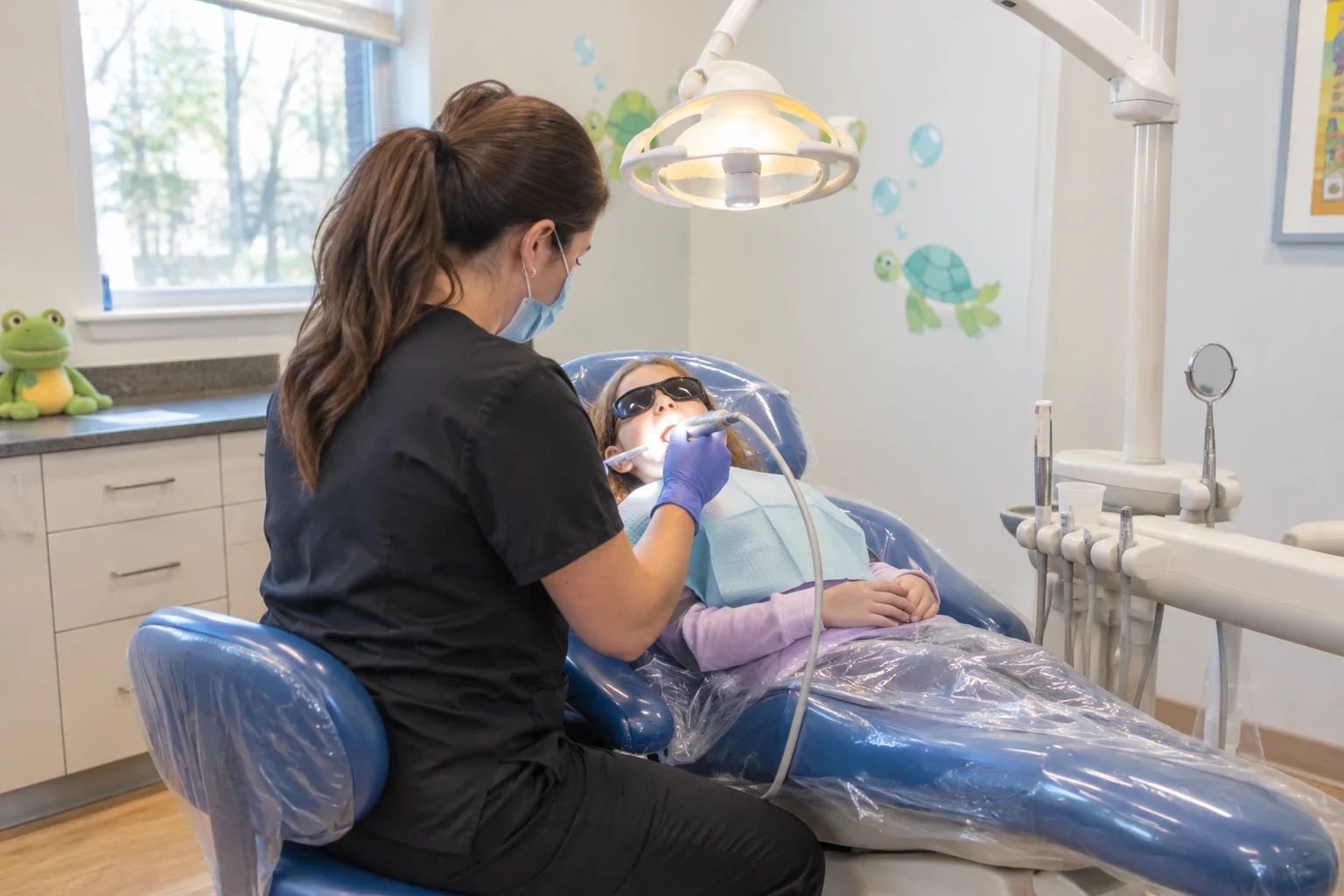
A pediatric checkup is more than a quick polish. We chart every tooth, look between the back molars where cavities hide, remove plaque and tartar, and explain what we found in plain terms, including how each part of the visit is likely to be billed to your insurance.
What a checkup does for your child's teeth
Enamel on baby teeth is roughly half as thick as enamel on permanent teeth. A cavity that starts in a molar groove or at the contact between two molars can reach the softer dentin underneath within months. Checkups spaced six months apart are timed to find those spots while a sealant, fluoride or a small filling can still handle them.
We see babies, toddlers, kids and teens. Plan the first visit around your child's first birthday, or about half a year after that first tooth breaks through, whichever comes sooner. For a one-year-old it is short: a knee-to-knee exam with your child's head resting in our lap, a look at how the teeth are coming in, and a practical talk about bottles, sippy cups and brushing.
We bring 11+ years in practice to every checkup, and much of that experience is in reading small changes from one visit to the next, like a white line along the gumline that was not there in the spring.
What happens during an exam and cleaning
- 01
Full tooth charting
We count every tooth, note which are erupting or loose, and record wear, chips and any missing or extra teeth. That chart becomes the baseline we compare against at the next visit.
- 02
Bitewing X-rays when they are due
Once the back teeth touch, decay between them cannot be seen with a mirror. We use low-dose digital sensors and take bitewings on a schedule set by your child's cavity risk, not automatically at every visit.
- 03
Cleaning and polish
A hand scaler lifts hardened tartar, which builds up most often behind the lower front teeth near the salivary ducts. We then polish with a rubber cup and paste and floss between each contact.
- 04
Fluoride varnish
A thin varnish is painted on and sets when it touches saliva, so there is no tray to hold. Our Fluoride Treatment page covers how it strengthens enamel and how often kids need it.
- 05
Gums, bite and soft tissue
We check for gum inflammation, crossbites, crowding and the effects of thumb-sucking or pacifiers. We also look at the tongue and lip attachments, since a tight frenum can affect feeding and speech.
- 06
An itemized visit record
You leave with a list of everything done, along with the procedure codes your plan will see on the claim. That makes it simple to match our record against the explanation of benefits your insurer mails later.
Questions about Exams & Cleanings?
Call(508) 456-8186When a checkup should move up the list
Six months have passed since the last cleaning
Plaque bacteria rebuild within days of a cleaning. Half a year is the usual window before small problems become harder to treat.
Chalky white lines near the gums
These are early demineralization, where acid has pulled minerals out of the enamel. Caught at this stage, the spot can often be reversed with fluoride.
Brown or gray spots in molar grooves
Stain and decay look alike to a parent. An exam and, if needed, an X-ray tell them apart.
Gums that bleed when brushing
Bleeding usually means gingivitis from plaque sitting at the gumline. A cleaning and better brushing technique typically clear it up.
Wincing at cold drinks or sweets
Sensitivity can point to a cavity that has reached the dentin. It is worth checking before it starts to ache.
How the appointment runs
- 1
One call to schedule and register
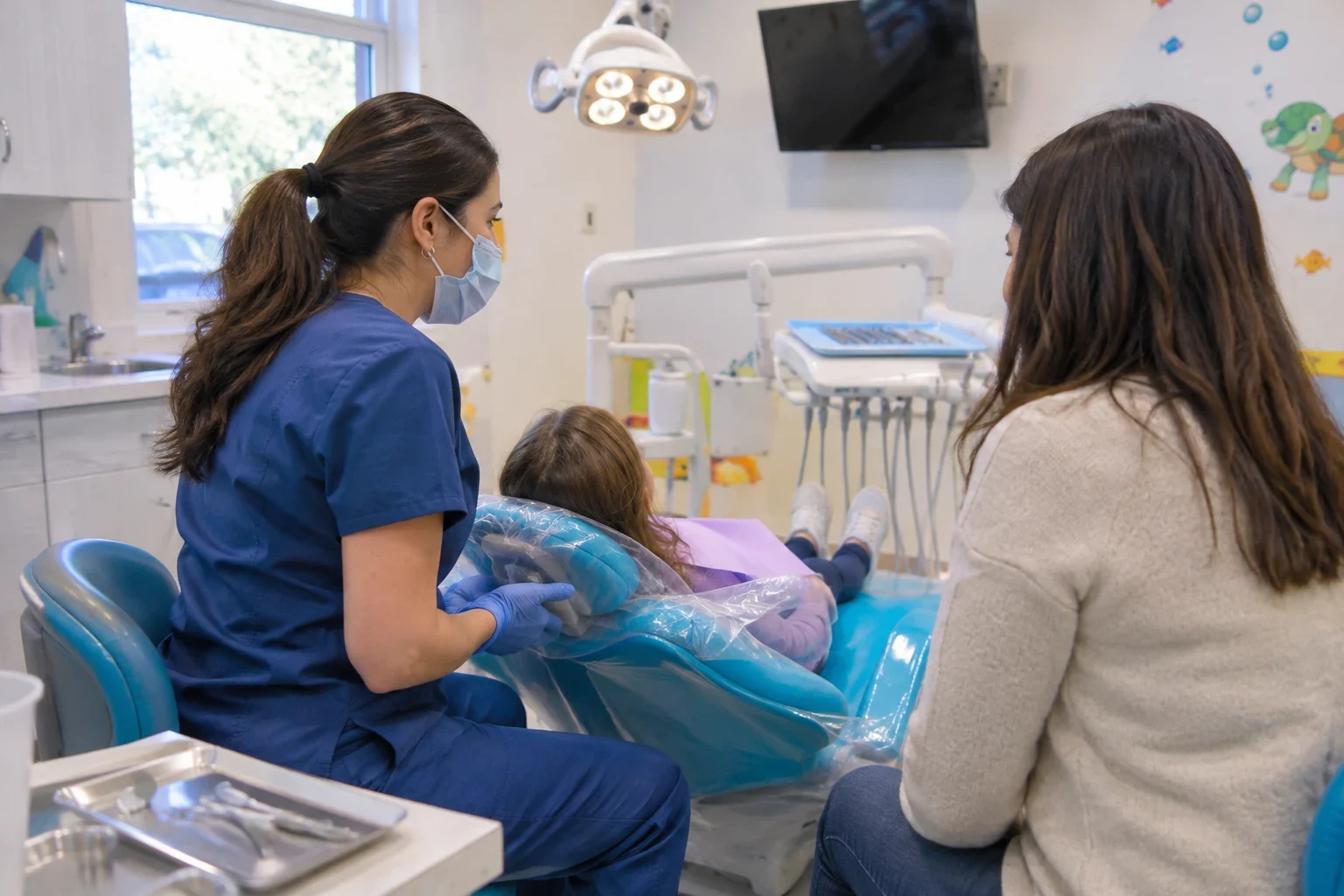
On the phone we set the appointment and, for new families, take care of registration: your child's health history, medications, your insurance member ID and any previous dentist. With that, we can look up your plan's preventive benefits before you arrive.
- 2
Getting comfortable
We use tell-show-do. Your child sees and touches the mirror and the polisher before we use them, and younger kids can sit on a parent's lap.
- 3
Exam, X-rays and cleaning
The dentist examines each tooth and the soft tissue, takes any X-rays that are due, and the cleaning and fluoride follow. Most visits move at your child's pace.
- 4
Review with you
We walk you through what we saw, with photos when something needs attention. If treatment is needed, you get a written plan with codes and a plain note on which items your plan may or may not cover, without promising what the insurer will decide.
What affects the cost of a checkup
Many dental plans treat exams, cleanings and bitewings as preventive care, but each plan sets its own rules on how often it pays for them. We check what we can before the visit and tell you up front if any part may fall outside your benefits. For payment, we take Visa, MasterCard and Discover cards, work with most insurance plans, and offer financing through the CareCredit Patient Payment Plan.
- Your plan's frequency limits
- Some plans cover two cleanings per benefit year, others one every six months to the day. A visit booked a week early can be denied, so we keep an eye on the dates.
- Which X-rays are due
- Bitewings are often limited to once a year, and a panoramic X-ray to once every few years. Whether one is due changes the visit total.
- Add-ons on the same day
- Fluoride varnish and sealants are separate line items. Plans often cover them only up to a certain age.
- Your child's age and needs
- A lap exam for a toddler is billed differently from a full cleaning for a teen with heavy tartar or braces.
Questions parents ask about exams and cleanings
How often should my child have a cleaning?
Every six months suits most kids. Children with a history of cavities, braces or enamel defects may do better every three or four months. We base the interval on what we actually see, and we will tell you if your plan limits how often it pays.
Are dental X-rays safe for kids?
Digital sensors use a very small dose of radiation. We take X-rays only when your child's age and cavity risk call for them, not as a routine at every visit. Bitewings are the only reliable way to see decay between back teeth that already touch.
Will my insurance cover the whole visit?
Many plans cover preventive care well, but we cannot promise what an insurer will pay because the plan makes that decision. We check your benefits before the visit, flag anything that might not be covered, and give you an itemized record with codes so you can compare it with your explanation of benefits.
What if my child will not sit in the chair?
That is common, especially under age four. We slow down, use tell-show-do, and can do the exam on your lap. Sedation Dentistry is reserved for treatment like fillings, not routine cleanings.
What should we bring to the first visit?
Bring your insurance card, a list of any medications and allergies, and contact details for a previous dentist so we can request past X-rays. Families come to us from Mansfield, Attleboro, Easton and other nearby towns, and the same checklist applies to everyone.
Put your child's next checkup on the calendar
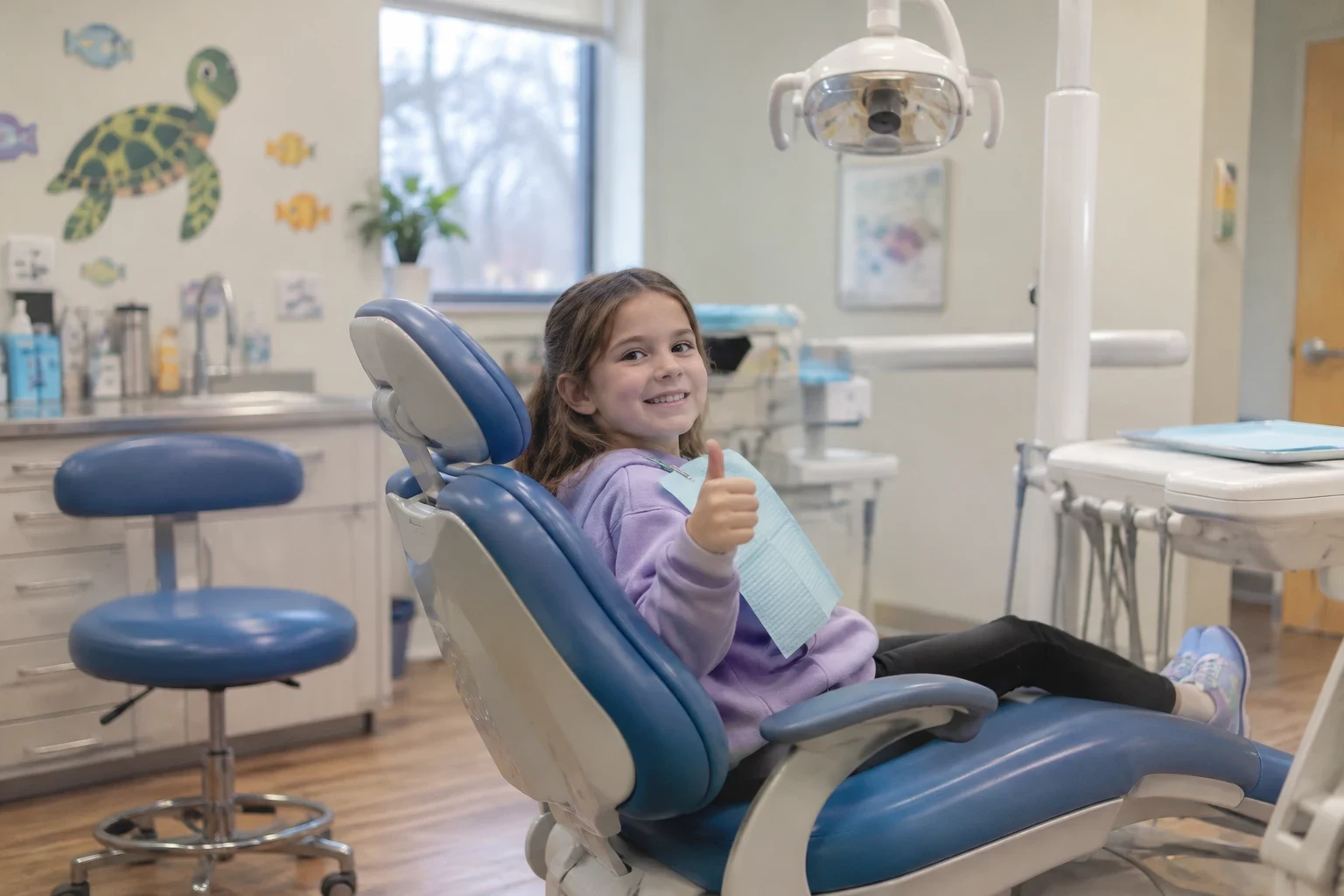
One phone call sets the appointment. For new families, the same call handles registration and insurance details so the first visit starts on time.