ServicesRoot Canals
Root Canals for Kids in Norton, MA
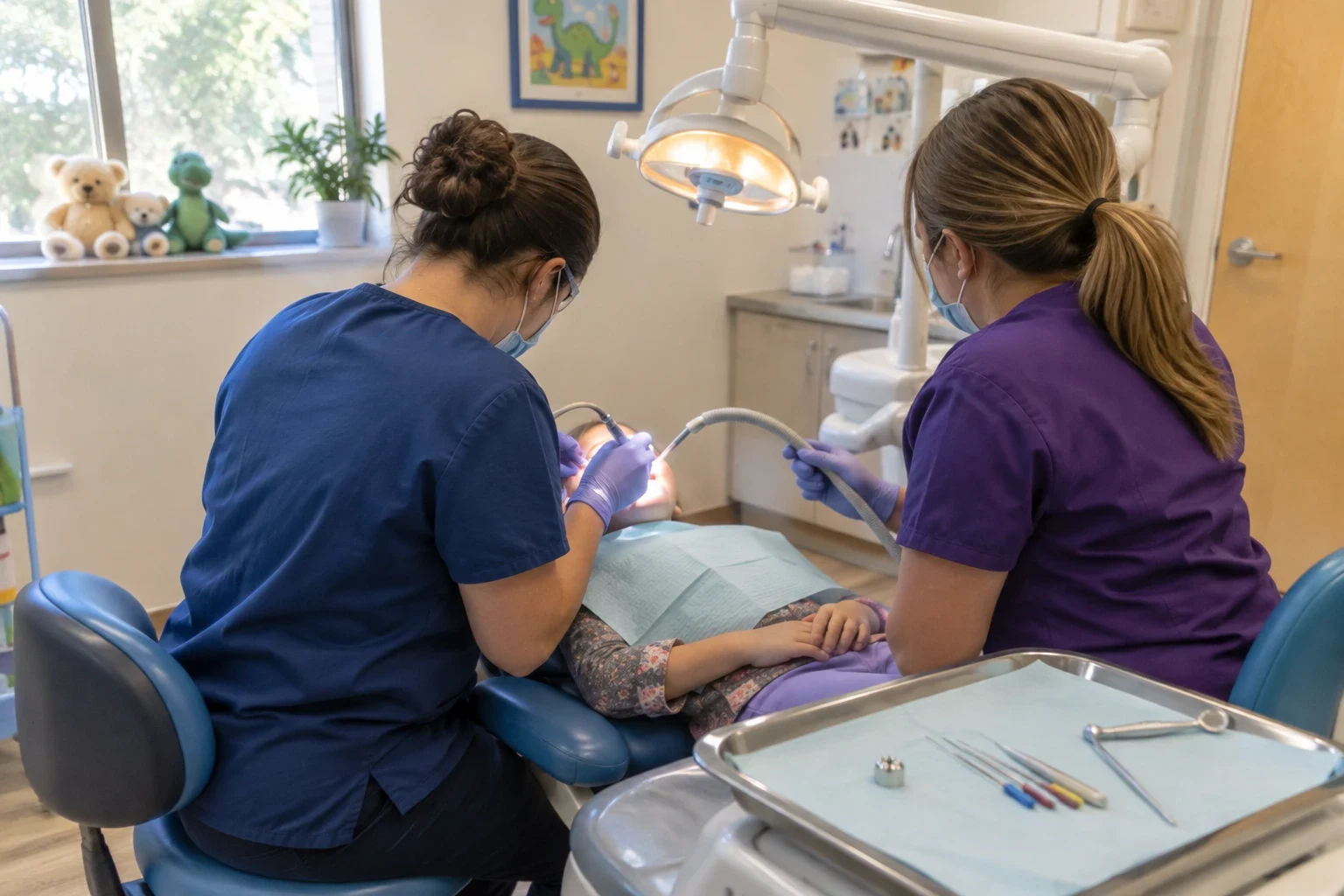
When decay or an injury reaches the soft pulp inside a tooth, a root canal can clear the infection and keep the tooth in place. We treat baby and permanent teeth gently, show you what the x-rays reveal, and explain what your insurance plan is likely to review.
What a root canal means in a child's tooth
Every tooth has a pulp chamber that holds nerves and blood vessels. Once a deep cavity or a crack lets bacteria reach that tissue, it becomes inflamed and then infected, and a filling alone can no longer fix it. Pediatric root canal treatment removes the damaged pulp, cleans the space and seals it so the tooth can keep working.
In baby teeth we usually perform a pulpotomy, which removes only the pulp in the crown and leaves healthy tissue in the roots, or a pulpectomy, which cleans out the root canals and fills them with a material that dissolves as the adult tooth comes in. Saving a baby molar matters because it holds space for the permanent tooth growing beneath it and lets your child chew and speak normally until it is ready to fall out.
With 11+ years in practice, we also know these visits come with paperwork. We take clear x-rays and photos, write down what we found, and walk you through how your plan is likely to view the procedure, without promising what it will pay.
What treatment includes
X-rays and pulp testing
We take x-rays to see how deep the decay goes and whether infection has reached the bone around the roots. For older kids we may check how the tooth reacts to cold, which helps us tell inflammation that can settle down from damage that cannot.
Pulpotomy for baby teeth
We remove the infected pulp from the crown, control the bleeding, and place a medicated material over the pulp left in the roots. The roots stay alive and the tooth stays comfortable.
Pulpectomy when roots are involved
If infection has spread into the root canals, we clean them with fine files and rinses, then fill them with a resorbable paste. The paste breaks down as the baby tooth's roots do, so it does not get in the way of the adult tooth.
Care for young permanent teeth
A child's permanent molar or front tooth often has a root that has not finished growing. We choose treatment that protects any living tissue so the root can keep lengthening and its walls can thicken.
A crown to protect the tooth
A treated tooth has lost much of its inner structure and can split under chewing force. Most back teeth get a stainless steel crown right after treatment; our Pediatric Crowns page covers options for front teeth.
Records for your claim
You receive a written estimate that lists each procedure separately, and we keep the x-rays and clinical notes your plan may ask for. If your plan reviews treatment in advance, we can send a pre-treatment estimate before we begin.
Signs your child may need a root canal
Pain that wakes them at night
Throbbing that starts on its own, or keeps a child awake, often means the pulp is inflamed past the point a filling can calm.
Sensitivity that lingers
A quick zing from cold or sweets is common with a small cavity. Pain that lasts well after the cold drink is gone points deeper into the tooth.
A bump on the gum
A small pimple-like swelling near a tooth, sometimes with a salty taste, is a gum boil. It signals infection at the root tip and should be checked soon.
A tooth that darkens after a fall
A front tooth that turns gray or yellow weeks after a bump may have a damaged nerve. Note the date and how the injury happened, because that detail matters for treatment and for any claim.
Swelling in the cheek or jaw
Puffiness near a tooth means infection may be spreading into the surrounding tissue. Have it looked at promptly, and if your child has a fever or swelling near the eye, see a medical provider right away.
How the appointment goes
- 1
Exam and a clear plan
We review the x-rays with you and explain whether the tooth can be saved or whether removing it is the better choice. You get a written, line-item estimate before any treatment starts.
- 2
Numbing and comfort
We apply a topical gel first, then give a slow, gentle injection of local anesthetic, and we tell your child what each step will feel like in plain words. For anxious kids or longer visits, our Sedation Dentistry page explains the options.
- 3
Cleaning and sealing the tooth
A thin rubber sheet called a dental dam isolates the tooth so saliva stays out while we work. A pulpotomy takes about as long as a filling visit; a pulpectomy or permanent tooth takes longer.
- 4
Crown and aftercare
Most teeth get their crown in the same visit. Your child may feel sore for a day or two, and we explain which foods to skip until the numbness wears off so they do not bite their cheek.
- 5
Paperwork afterward
We send the claim with the procedure codes, x-rays and notes. If your plan comes back with questions, we help you understand what it is asking for.
What affects the cost
We set a fee only after reading the x-rays, since the amount of work depends on how deep the infection goes. The written estimate breaks out every procedure on its own line, which makes it easy to hold up against your plan's benefit summary. For payment, our office takes MasterCard, Visa and Discover cards, works with most insurance plans and offers the CareCredit Patient Payment Plan.
- Pulpotomy or pulpectomy
- Treating only the pulp in the crown is a shorter procedure. Cleaning and filling each root canal adds chair time and material.
- Baby tooth or permanent tooth
- A permanent molar may have three or four canals and more steps than a baby tooth, which affects both the length of the visit and the procedure code.
- The crown that follows
- Stainless steel and tooth-colored crowns carry different fees, and plans often cover them at different percentages.
- Sedation, if used
- Nitrous oxide or deeper sedation appears as a separate line and may be covered under its own benefit.
- Your plan's rules
- Waiting periods, frequency limits and the yearly maximum all shift what you owe. We will explain any code on the estimate, but the coverage decision belongs to your plan.
Questions parents ask about root canals
Something not covered here? (508) 456-8186
Does a baby molar really need treatment if it will be lost later?
Back baby teeth often hold on until a child is 10 to 12 years old, so later can mean years. Left alone, an infected molar can hurt, and the infection can reach the permanent tooth developing below it. If it comes out early, the neighboring teeth tend to tip into the gap, so saving it protects both the space and your child's chewing.
Will my child feel pain during the procedure?
We numb the tooth completely before starting, so most kids notice pressure and vibration rather than pain. The gum can be tender for a day or two afterward, and a children's pain reliever your pediatrician approves usually keeps it comfortable.
Will insurance cover my child's root canal?
Many plans include pulp therapy, but what yours pays depends on its waiting periods, yearly maximum and coverage levels. When your plan allows it, we submit a pre-treatment estimate first and give you copies of the x-rays and notes. We will not guess at or promise a payment amount.
The tooth was hurt in a fall or at sports. What should we document?
Record the date, the place and how the injury happened. Photograph the tooth and any lip or gum damage that same day, and store those photos with our x-rays and notes. Some families also have school or sports accident coverage that can apply alongside dental insurance; we supply records you can submit, but each insurer makes its own decision.
Is it ever better to pull the tooth?
Yes. When the root has already dissolved, the infection has destroyed too much bone, or the tooth is about to fall out, removal is often the simpler choice. Our Extractions page describes that visit, and we may recommend a space maintainer to hold the gap.
How do we care for the tooth afterward?
Brush and floss it like the rest of your child's teeth, and keep sticky candy and hard foods away from a new crown. At regular Exams & Cleanings visits we take x-rays of the treated tooth to confirm the area around the roots is healing.
Get an aching tooth checked
If a tooth hurts, has a bump on the gum or has changed color, a visit lets us see what is happening under the surface. New patients can register over the phone while scheduling.